
What is AI Workflow Automation and Why Does it Matter for B2B?

Let's be honest. Many B2B organizations are still wrestling with a relentless tide of manual tasks, siloed systems, and opaque processes that drain resources and stifle growth. You know the drill: endless data entry, approval bottlenecks, disconnected tools, and marketing efforts where measuring true ROI feels like guesswork. This isn't just frustrating; it's costing you real money, employee morale, and a significant competitive edge.
The good news? You don't have to stay stuck. This is where AI workflow automation enters the picture, not as a futuristic dream, but as a practical, immediate necessity for any forward-thinking B2B enterprise. At its core, it's about leveraging artificial intelligence to streamline, optimize, and even autonomously execute repetitive, rule-based, or data-intensive tasks across your business operations.
Think about the sheer volume of data and decisions flowing through a typical B2B sales or marketing funnel. For instance, many B2B marketing efforts often struggle with demonstrating direct impact. A recent report from NEWMEDIA.COM highlighted how common B2B marketing failures stem from an inability to attribute revenue and measure outcomes. AI-driven insights and automation can turn this tide, providing clarity and attributable results.
It's not about replacing your team; it's about empowering them. Imagine your sales reps spending less time on scheduling and more time closing deals because an AI demo agent like Naoma handles immediate product demonstrations. Or consider customer support where AI routes inquiries, pulls relevant knowledge base articles, or even drafts initial responses, letting human agents focus on complex problem-solving and relationship building.
Now, let's be clear: AI isn't a silver bullet for every interaction. A Search Engine Journal report, for example, found B2B buyers still trust peers over AI chatbots for certain high-stakes or nuanced conversations. And that's perfectly fine. The power of AI workflow automation isn't in eliminating human touch, but in intelligently automating the underlying processes that support those critical human interactions, making them more efficient, accurate, and scalable. It's about letting your people do what they do best, while AI handles the rest.
The real win for B2B isn't just cutting costs; it's about unlocking new levels of operational efficiency, enhancing data accuracy, and accelerating decision-making. That's a strategic advantage you can't afford to ignore.
Industries across the board are recognizing this. Financial services, a sector notoriously complex and ripe for efficiency gains, sees considerable investment in modernizing operations. For instance, JONES FINANCIAL COMPANIES LLLP recently secured $325,000 in an offering, underscoring the ongoing push for smarter operations and digital transformation in complex industries. It’s a clear signal: the future of B2B success hinges on intelligent automation.
Where Are AI Workflow Examples Transforming B2B Operations?

So, where exactly are these AI workflow automation examples making the biggest splash in B2B? It's not just one sector; we're seeing it everywhere, from back-office efficiency to customer-facing interactions. Think of it as a force multiplier, not just a fancy tool.
Take financial services. Beyond just modernizing operations, as we discussed, AI is tackling things like fraud detection, compliance checks, and automated data processing. It's about reducing human error and speeding up incredibly complex, repetitive tasks. This isn't just about saving money; it's about managing risk better, too.
Then there's marketing and sales automation. This is huge. AI helps personalize outreach, score leads with greater accuracy, and even generate preliminary content. Companies are using it to understand customer behavior at scale. For instance, NEWMEDIA.COM recently highlighted how AI-driven platforms can turn opaque B2B marketing activity into attributable revenue, which is exactly what every CMO wants to hear. You've also got specialized tools emerging, like Naoma AI Demo Agent, which provides immediate, tailored video demos for B2B SaaS. That's a direct sales workflow getting a major AI upgrade. But here's a word of caution:
While AI excels at efficiency, it's not a silver bullet for every customer interaction. A report by Search Engine Journal found that B2B buyers still significantly trust peers over AI chatbots. So, it's about augmenting human teams, not replacing that essential human connection, especially in complex sales.
Customer experience and support is another big one. AI-powered chatbots handle routine queries, freeing up human agents for more complex issues. It's about faster response times and 24/7 availability. We're talking about better customer satisfaction, pure and simple.
Think about operational efficiency and supply chain management. Predictive analytics, powered by AI, helps forecast demand, optimize inventory, and even predict equipment failures before they happen. This means less downtime, fewer stockouts, and smoother logistics. Companies like Mav Automation Ventures Inc. are clearly betting big on this future, showing continued investment in the automation sector. Even internal processes, like data visualization for teams using tools like AgentPulse by Rectify, are getting the AI treatment, making complex data digestible.
And let's not forget HR and legal departments. AI is streamlining everything from document review and contract analysis to candidate screening and onboarding processes. It's about reducing administrative burden and ensuring compliance. McKinsey & Company has highlighted how AI adoption is accelerating across virtually all industries, driven by these tangible benefits.
The bottom line? AI isn't just a futuristic concept. It's here, it's working, and it's reshaping how B2B companies operate across the board. It's not about if you'll adopt it, but when, and how effectively.
How Do Startups Gain a Competitive Edge with AI Automation?

So, how exactly are startups leveraging this AI wave to outmaneuver bigger, more established players? It boils down to agility and smart resource allocation. Startups don't have legacy systems holding them back; they can build AI into their core operations from day one. This lets them punch way above their weight class.
Think about ai workflow automation examples across the board. For a startup, every minute and every dollar counts. Automating repetitive, time-consuming tasks isn't just a nice-to-have; it's a survival strategy. We're talking about everything from automating lead qualification and customer support to streamlining internal operations like HR and finance.
Consider something like OpenOwl, for instance. It promises to automate what APIs can't, using just a prompt. That's a game-changer for lean teams, allowing them to extend automation capabilities without needing extensive custom development. Similarly, for market research and content curation, tools like Surf Social Websites can pull together disparate content and insights, giving startups a real-time pulse on their industry without manual heavy lifting. These tools aren't just about speed; they're about accuracy and consistency, too.
Startups are using AI to:
- Automate customer service: Chatbots and virtual assistants handle routine queries, freeing up human agents for complex issues. Customers get instant responses.
- Personalize marketing and sales: AI sifts through data to identify high-potential leads and tailor outreach messages. It's like having an army of data scientists and copywriters working 24/7.
- Streamline HR: From automated candidate screening to onboarding workflows, AI reduces administrative burden. It ensures compliance and a smoother experience for new hires.
- Enhance product development: AI can assist with code generation, bug detection, and even analyzing user feedback to prioritize features. Even in specialized fields like media production, we're seeing advancements, with companies like Telestream planning to showcase Adobe-centric solutions at NAB 2026, indicating a continuous evolution of AI integration even in creative workflows.
The real power for startups comes from reallocating human capital. Instead of getting bogged down in repetitive tasks, teams can focus on strategic thinking, innovation, and building stronger customer relationships. That's where true competitive advantage lies.
This drive isn't confined to a single market; we're seeing global initiatives and significant investment. Business Insider recently reported how Chinese cities are going all-in on OpenClaw startups, offering massive subsidies and free resources. That's a clear signal of where the smart money and government support are heading. It's clear investors see the potential, with entities like GAIN-GR-0217 Fund I being established specifically as platform funds for promising ventures. Startups that embrace AI automation aren't just efficient; they're more attractive to investors looking for scalable, future-proof businesses. They're built for growth, right from the start.
What Practical Steps Can Your Startup Take to Implement AI Workflows?

Alright, so investors are hyped about AI automation. You're probably asking, 'Okay, but how do we actually do this?' It's not about a massive overhaul from day one. Think small, then scale. You're building for growth, remember? That means getting smart about your operational efficiency right from the start.
First, don't try to automate your entire business. That's a recipe for disaster. Identify your biggest operational headaches. Where are you burning time on repetitive, rules-based tasks? Maybe it's customer support ticket routing, data entry for new client onboarding, or even generating initial drafts for marketing copy. These are prime candidates for AI workflow automation examples. Pick one. Just one.
Next, look at your data. AI systems are only as good as the data they train on and process. Is your data clean? Consistent? Accessible? If not, you've got some prep work. Garbage in, garbage out, right? Think about establishing solid data pipelines early on. This sets the foundation for any successful automation initiative.
You don't need a team of PhDs to get started. Many platforms today offer low-code or even no-code solutions that let you build out these workflows. Products like Denovo promise to help you 'Build and run your business while you sleep,' which is exactly the kind of efficiency we're talking about. And for deploying actual AI agents, services like Huddle01 Cloud boast 'Deploy your AI Agents in 60 seconds.' That's fast. It's about finding the right tools that integrate with your existing tech stack via robust API integrations.
Of course, when you're connecting systems and automating processes, security can't be an afterthought. You've got to protect your data and prevent abuse. This means implementing things like rate limiting on your APIs, as discussed in recent articles on C-sharpcorner.com. It's basic hygiene for any automated system that interacts with the outside world.
Once you've got a small workflow running, test it. Refine it. Don't just set it and forget it. Automation works best when it's layered with human strategy. Think about what Search Engine Journal highlighted regarding PPC automation layering: it's combining automation with strategy, not replacing strategy with automation. That's a key distinction. You're building a smarter business, not just an automated one. Start with an MVP (Minimum Viable Product) for your AI workflow. Get it right, then expand to other areas. McKinsey & Company often talks about this iterative approach for successful digital transformations.
Ultimately, AI workflow automation isn't just about cutting costs. It's about freeing up your team to do higher-value, more creative work. It's about building a startup that can truly scale without breaking under its own weight.
How Can You Maximize the Value of AI Workflow Automation Examples?

So, you've got your AI workflow automation examples in play, maybe even an MVP running smooth. That's a solid start. But to really squeeze every drop of value out of it, you've gotta think bigger than just the initial deployment. It's about shifting from simply automating tasks to truly optimizing your entire operational flow.
First off, don't just automate. Optimize. This means you're constantly evaluating the automated processes. Are they still the most efficient? Are they delivering the expected ROI? Just like Search Engine Journal points out with PPC Automation Layering, smart advertisers don't just turn on automation and walk away; they combine it with strategy. You're layering intelligence, not just switching on a machine.
Here’s how you can really dial up the impact:
- Strategic Alignment is Key: Your automated workflows need to directly support your core business objectives. If it's not moving the needle on revenue, customer satisfaction, or operational efficiency, why are you doing it? McKinsey & Company consistently highlights that successful digital transformations are tightly linked to business strategy.
- Embrace Continuous Feedback Loops: AI models thrive on data. You need to build in mechanisms to collect performance data, analyze it, and feed it back into the system for refinement. This iterative improvement approach ensures your automation gets smarter over time. It's not a one-and-done setup; it's a living system.
- Focus on Integration, Not Isolation: Individual AI automations are great, but their power multiplies when they talk to each other. Think about how a tool like GeneratePPT, which instantly creates presentation slides, could integrate with your project management software or data analytics platform. Seamless integration reduces friction and creates truly end-to-end automated processes.
- Prioritize High-Value Activities: Not all tasks are created equal. Identify the repetitive, time-consuming tasks that, when automated, free up your most talented people for truly strategic, creative, and customer-facing work. Harvard Business Review often emphasizes that AI’s greatest value lies in augmenting human capabilities, not replacing them entirely.
- Don't Forget Change Management: Technology is only half the battle. Your team needs to understand, embrace, and be trained on these new ways of working. Without buy-in, even the most sophisticated AI workflow automation examples can fall flat.
Ultimately, maximizing value isn't just about the tech itself. It's about cultivating a culture where intelligence, strategy, and continuous improvement are baked into every automated process. You're building a smarter business, not just an automated one.
It's about empowering your team to be more strategic, more creative, and more impactful. That’s where the real competitive edge lies.
What Does the Future Hold for AI in B2B Workflow Automation?
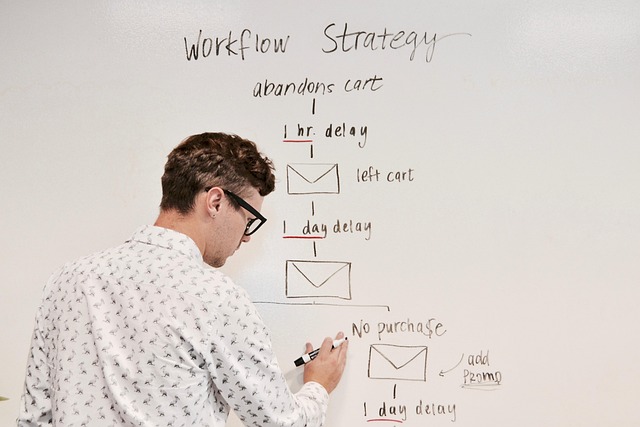
Okay, so we've covered a lot about how AI isn't just about automating tasks; it's about building smarter operations and empowering your people. We've seen firsthand how various Naoma AI Demo Agent style solutions and tools like Dictura are already enhancing productivity across the board. The real future for AI in B2B workflow automation isn't just about more sophisticated algorithms. It's about how effectively businesses integrate these tools to augment human capabilities, not replace them. We're talking about a world where AI workflow automation examples become the norm, freeing up your team for truly strategic work.
The biggest mistake? Thinking AI runs on autopilot. It doesn't. You need human intelligence to guide it, refine it, and ensure it aligns with your strategic goals. A recent report published by Search Engine Journal highlights that B2B buyers still trust peers over AI chatbots. This isn't a limitation of AI, but a clear signal that the human touch remains irreplaceable in high-stakes interactions. AI handles the grunt work; people build the relationships.
What's next then? It's about creating intelligent systems that learn and adapt, continuously improving your operations. We're seeing substantial investment in this space, with entities like AP Future Holdings LP making moves, showing confidence in future AI-driven ventures. This isn't just about efficiency; it's about driving measurable outcomes, as NEWMEDIA.COM points out regarding attributable revenue in B2B marketing. It's about understanding the "why" behind every automated process.
So, what's your move? Don't just chase the next shiny AI tool. Instead, focus on building an AI-powered culture. Empower your people. Challenge them to think about how AI can elevate their work, not just simplify it. Start small, iterate fast, and keep people at the center of your strategy. That's how you'll unlock real, sustainable growth.
The future of B2B workflow automation isn't about AI taking over; it's about AI elevating human potential.
