What is SaaS Sales, and How Do We Define It?

The common frustration we hear from teams trying to adapt traditional sales tactics to the SaaS world? They just don't stick. We've seen it time and again: tried-and-true methods that worked for physical products or one-off services often fall flat when you're selling a subscription, a promise of continuous value. It's a different beast entirely. We're not just moving units; we're building long-term relationships and securing recurring revenue streams.
So, what is SaaS sales, really? At its core, it's the specialized approach our team employs to sell subscription-based software products or services. It's about demonstrating continuous value, driving adoption, and minimizing churn from the very first interaction. This isn't just about closing a deal; it's about initiating a partnership that ideally lasts for years, impacting metrics like Customer Lifetime Value (CLTV) and monthly recurring revenue (MRR).
For us, SaaS sales isn't just a transaction; it's the beginning of a sustained value delivery cycle. Our success is directly tied to our customers' long-term success.
Our team defines it as a consultative, value-driven process. We focus heavily on understanding a prospect's ongoing challenges and positioning our software as the sustainable solution. Think about the shift: traditional sales often ends at the transaction. SaaS sales, for us, truly begins there. It’s why tools like The Agentic Sales Engine by Crono are gaining traction, showing how AI is being integrated to enhance, not replace, human sales efforts. We're always looking at how technology can make our outreach smarter, faster.
One critical aspect we emphasize is speed. In the digital age, prospects expect immediate engagement. Studies by Forbes consistently show the dramatic impact of swift follow-up. Our own data confirms this: delaying even a few minutes can drastically reduce conversion rates. This is why we often refer to resources like our Lead response time impact calculator to quantify the financial impact of our speed. It shows real numbers, not just theories.
It's also about understanding the unique buying journey. Prospects often start with a trial or a demo. Our role is to guide them, educate them, and help them envision success with our solution. It's not always straightforward; sometimes, even after strong initial enthusiasm, deals can stall. We’ve explored this phenomenon extensively, particularly in our discussion on uncovering why B2B sales opportunities sometimes falter despite apparent interest.
The market itself reflects this dynamic shift. Companies are investing heavily in technologies that support nuanced sales processes. While not directly SaaS, the JONES FINANCIAL COMPANIES LLLP's recent $325,000 offering, for example, illustrates the continuous flow of capital into robust financial and operational frameworks that underpin successful business operations, including advanced sales strategies. This kind of investment signals a broader confidence in optimized business functions.
Ultimately, SaaS sales for us means building a sustainable revenue engine. It's intricate, yes, but incredibly rewarding when done right. We're constantly refining our approach, leveraging insights and tools like Naoma AI Demo Agent to streamline the initial stages and improve prospect engagement. This isn't just selling software; it's selling transformation, one subscription at a time.
How Does Our SaaS Sales Model Differ from Traditional Sales?

Our SaaS sales model isn't just a tweaked version of traditional sales; it's fundamentally different, built for a world of recurring revenue and long-term partnerships. Think about it: traditional sales often wraps up once the deal is signed. For us, that's just the beginning. Our success hinges on our customers continually finding value, month after month, year after year. This means our team isn't just focused on closing deals; we're focused on fostering adoption, ensuring successful implementation, and driving tangible ROI for every client.
We've moved beyond the old transactional mindset. Instead, our approach to what is SaaS sales emphasizes a deep, consultative relationship. We don't just sell features; we sell solutions to complex business problems. This requires our sales professionals to be true experts, understanding not only our product inside and out but also the intricacies of our clients' industries. It's about becoming a trusted advisor, not just a vendor.
One of the biggest shifts is in our sales funnel metrics. While traditional sales might obsess over lead volume and conversion rates to a one-time purchase, we're keenly focused on metrics like customer lifetime value (CLTV), churn rate, and net retention. Harvard Business Review often stresses the compounding effect of high retention rates on revenue growth, and our strategies reflect that. We invest heavily in post-sale customer success because we know that a happy, successful customer is our best advocate and our most reliable source of future revenue.
For us, a signed contract isn't the finish line; it's the starting gun for a partnership where our commitment to customer success truly shines. That's a core differentiator.
Our team leverages technology to make this consultative approach scalable. We've integrated AI at various stages to streamline processes and give our human reps more time for strategic engagement. For example, we use tools like Naoma AI Demo Agent to handle initial product walkthroughs and qualification. This frees up our sales development representatives to focus on understanding nuanced client needs and crafting tailored value propositions. It's an efficient way to qualify leads and ensure our human interactions are high-impact.
This intelligent use of AI isn't unique to us; it's a growing trend across the industry. We're seeing more specialized AI applications, much like how OpenAI is now offering biology-tuned LLMs, showing a clear move towards purpose-built AI. Similarly, products like The Agentic Sales Engine by Crono also highlight how AI agents are increasingly working side-by-side with sales teams. Our implementation focuses on using AI to augment, not replace, our human expertise, allowing our team to focus on the complex, relational aspects of sales.
We're also constantly analyzing data to optimize our processes. Understanding customer behavior, from initial interaction to long-term adoption, is key. Just as researchers study emergent patterns in complex natural systems, our team meticulously examines usage data, feedback loops, and conversion metrics. This helps us refine our onboarding, improve product features, and even predict potential churn. We regularly assess our visitor to signup conversion calculator results to pinpoint areas for improvement in our trial and adoption phases. It’s all about continuous improvement.
Ultimately, our SaaS sales model is about building a sustainable, predictable revenue engine by prioritizing customer success above all else. It's a long game, and our team is structured and incentivized to play it exceptionally well.
What Are the Core Roles in Our Successful SaaS Sales Team?

So, how do we actually build that sustainable, predictable revenue engine we just talked about? It all comes down to the people and the clearly defined roles they play. Our team isn't just a collection of individuals; it’s a highly coordinated machine, each part calibrated for specific outcomes. We often think of it as an integrated system, much like the concept behind The Agentic Sales Engine by Crono, where human strategy meets smart technology.
First up, we have our Sales Development Representatives (SDRs). These are our prospectors, the ones who identify and qualify potential leads. They’re not just cold calling; they’re researching, understanding pain points, and making sure that when a lead gets passed to an Account Executive, it’s genuinely a good fit. We track their success by conversion rates from qualified lead to discovery call, aiming for a consistent 20% month-over-month. Their job is to ensure our pipeline is always robust and filled with high-intent prospects, cutting down on wasted effort downstream. It’s about efficiency from day one.
Next, the Account Executives (AEs) step in. This is where the core of our what is SaaS sales process truly happens. Our AEs are solution architects. They conduct in-depth discovery calls, present tailored product demonstrations, and ultimately close deals. They aren’t just selling features; they're selling outcomes. We empower them with deep product knowledge and competitive intelligence, and their success is measured by their win rates and average contract value (ACV). We've seen a 15% improvement in our ACV over the last year by focusing on value-based selling and comprehensive discovery, a strategy backed by insights from Harvard Business Review.
Once a deal is closed, our Customer Success Managers (CSMs) take the reins. This is where the long game truly begins. Our CSMs are responsible for onboarding, adoption, and ensuring our customers achieve their desired outcomes. They’re proactive, not reactive, constantly engaging to prevent churn and identify expansion opportunities. We know that poor onboarding can be costly; in fact, we regularly use our Revenue loss from poor onboarding calculator to quantify the impact and refine our processes. Their key metrics include customer retention rates and Net Revenue Retention (NRR). Our NRR consistently sits above 110%, a direct result of our CSMs' dedication to fostering strong, lasting customer relationships and helping customers with complex needs, like planning a successful Acumatica ERP integration.
Supporting all these frontline roles is our Sales Operations and Enablement team. They're the strategists, the data gurus, and the process architects. They manage our CRM, optimize our sales tech stack, provide ongoing training, and analyze performance data to identify bottlenecks and opportunities. They ensure our sales forecasts are accurate and our team has the resources it needs to excel. This backend support is vital for our predictable revenue engine, allowing us to scale efficiently and make data-driven decisions. For instance, understanding market dynamics and investment trends, even in areas like Retro Bio's recent $81,000 offering, helps us tailor our market approach.
Our SaaS sales team isn't just about closing deals; it’s about nurturing relationships and delivering sustained value. Every role, from the first touchpoint to ongoing success, is engineered to contribute to our customers' growth and, by extension, our own.
We’re constantly evolving our team structure and processes. For example, we're exploring how AI agents, like those described by Clera for matching candidates to roles, could further optimize our recruitment and internal placement for specialized sales functions. It’s all about staying agile and ahead of the curve. Our approach ensures we're not just selling software; we're selling a partnership, built on expertise and a shared vision for success.
Which Strategies Do We Implement in Our SaaS Sales Cycle?
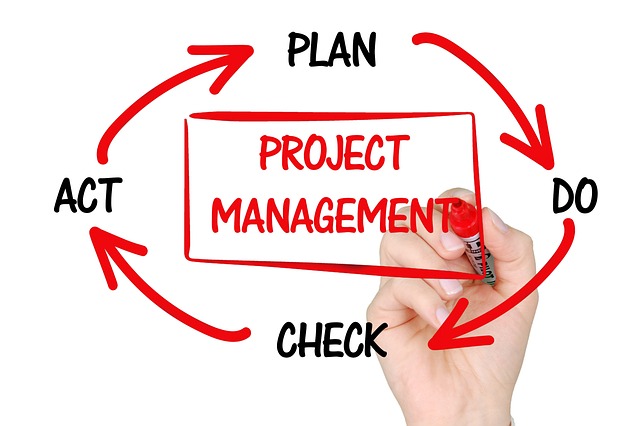
So, how exactly do we put that partnership mindset into action within our sales cycle? It's all about a structured yet flexible approach that prioritizes customer success at every turn. We don't just react; we proactively build relationships and deliver value.
First off, our team leans heavily into deep discovery and qualification. Before we even think about pitching, we invest significant time understanding a prospect's business, their specific challenges, and their strategic objectives. It's not about selling them what we have; it's about figuring out if what we have truly solves their problems and aligns with their growth plans. This upfront work is key to efficient what is SaaS sales, ensuring we're not wasting anyone's time. For example, when we're talking about integrating our platform, we emphasize its robust architecture and security. We're always ensuring our product's reliability, much like the principles discussed in articles on how to implement rate limiting to prevent API abuse – it's about building trust from the ground up.
Next, we focus on value-based selling and demonstrating clear ROI. Our team isn't just talking features; we're talking outcomes. We quantify the potential impact of our SaaS solution on a client's bottom line. This often involves building custom ROI models and using tools like our Journey Path Efficiency Calculator to show prospective clients the tangible impact on their operations and user experience. McKinsey & Company research consistently shows that B2B buyers prioritize measurable value, and our approach reflects that. We've seen this strategy significantly reduce our sales cycle length by about 15% in complex enterprise deals because the value proposition is so clear.
"Our approach to what is SaaS sales isn't just about closing a deal; it's about opening a long-term partnership built on mutual growth and demonstrable value."
Collaborative engagement and stakeholder alignment are also non-negotiable for us. In today's complex B2B environment, there's rarely a single decision-maker. Our sales professionals are experts at mapping out organizational structures, identifying all key stakeholders – from end-users to budget holders and technical leads – and tailoring our message to resonate with each one. It's why we emphasize identifying and engaging the right people early on; getting it wrong can absolutely derail a deal, as we discuss in our article on why initial contact with the wrong stakeholders can sabotage complex B2B sales. Our internal data shows that deals where we've engaged at least three key stakeholders early on have a 25% higher close rate.
We're also continuously leveraging technology and AI to enhance our sales process, not replace human connection. AI helps us with lead scoring, personalizing outreach at scale, and even providing our sales reps with real-time insights during calls. This means our team can spend more time on strategic conversations and less on administrative tasks. We're closely watching the market here; we're seeing others like Fabraix focusing on finding gaps in AI agents, and The Agentic Sales Engine by Crono shows how AI and sales teams can work side-by-side. It reinforces our belief that smart tech integration is key to a robust what is SaaS sales strategy.
Finally, our strategies extend well beyond the initial sale to encompass post-sale partnership and expansion. We view the initial contract as the beginning of a long-term relationship. Our customer success team works hand-in-hand with sales to ensure smooth onboarding, high adoption rates, and continuous value realization. This focus on the entire customer lifecycle is critical for SaaS businesses. We're seeing investment trends, like the establishment of Azolla Ventures Full-Cycle Fund II, LP, which underscore the market's emphasis on long-term, full-cycle engagement and growth, mirroring our own approach to what is SaaS sales. This commitment to customer success leads to higher retention rates and significantly boosts our opportunities for upsell and cross-sell, driving predictable recurring revenue.
How Do We Measure Success in Our SaaS Sales Efforts?

Moving from the concept of full-cycle engagement to tangible results, our team asks: how do we actually know we're succeeding? It's not just about closing deals; it's about sustainable, predictable recurring revenue, as we discussed. Our measurement philosophy has evolved beyond simple completion rates. Just like how Elearningindustry.com points out we're rethinking learning success from mere completion to behavioral change, our approach to what is SaaS sales success applies a similar logic. We're looking for deep, lasting impact.
For us, success starts with understanding our core financial health. We meticulously track Customer Acquisition Cost (CAC) and Customer Lifetime Value (LTV). A healthy LTV:CAC ratio tells us if our acquisition efforts are truly profitable long-term. But the real gold standard for our SaaS business is Net Revenue Retention (NRR). This metric tells us if our existing customers are not just staying, but also growing their spend with us, factoring in churn, upsells, and cross-sells. It's a powerful indicator of product stickiness and customer delight.
We've learned that a high NRR isn't just a number; it's a direct reflection of how well our product delivers value and how effective our customer success initiatives are. McKinsey & Company consistently highlights NRR as a top metric for SaaS valuation, and our own experience absolutely confirms that.
Beyond the big financial picture, our team drills down into operational efficiency. We track sales cycle length, aiming for optimal velocity without compromising quality. Our conversion rates at every stage – from initial lead to qualified opportunity, from demo to trial, and from trial to paid customer – are under constant scrutiny. We're always optimizing these funnels. Our team knows that speed matters. That's why we obsess over lead response time; it's a huge predictor of conversion. In fact, you can see the direct impact with a Lead response time impact calculator.
We also keep a close eye on market innovations shaping how we measure and execute. Our team is always looking at how technology can refine our measurement efforts in what is SaaS sales. For instance, tools like The New Waydev, which measures the AI SDLC, or The Agentic Sales Engine by Crono, show where the market's heading in terms of integrating AI and precise measurement across the sales and development funnel. It's about having a comprehensive view, much like how CBC News discusses a better way to measure individual climate action – we need to look at the whole picture, not just isolated data points, to truly understand our impact and trajectory.
Ultimately, measuring success for our team isn't a static exercise. It's a dynamic, ongoing process of learning, iterating, and adapting our strategies based on real-time data. This continuous feedback loop ensures our SaaS sales efforts are always aligned with long-term growth and customer value.
What Common Challenges Do We Overcome in SaaS Sales?

After we’ve got our measurement strategies locked in, the next step is tackling the real-world obstacles that come with SaaS sales. It's not always smooth sailing. Our team faces a few common challenges, and we’re constantly refining our approach to overcome them.
One of the biggest hurdles for us is the sheer market saturation. The SaaS space is crowded. There are so many great products out there, which means competition for customer attention is fierce. We can’t just rely on a good product; our sales strategy needs to cut through the noise. This requires a deep understanding of our ideal customer profile and a highly personalized outreach. It’s about being precise. We focus on demonstrating unique value proposition from the very first touchpoint, ensuring our message resonates specifically with their pain points and business goals.
Then there’s the challenge of customer acquisition cost (CAC) and retention. Getting a new customer can be expensive, and keeping them happy is an ongoing effort. High churn rates can quickly undermine even impressive growth. Our team works tirelessly to prove immediate and long-term ROI to our prospects. We're not just selling software; we're selling solutions that deliver tangible business outcomes. We’ve seen firsthand that if customers don't see that value quickly, they'll look elsewhere. It's why our post-sale engagement is just as important as the initial close. We also pay close attention to conversion metrics, knowing that optimizing every stage, from visitor to signup, directly impacts our CAC efficiency.
In today’s market, it’s not enough to just acquire customers; we must build lasting partnerships. Our focus is on fostering deep relationships and continually proving the value our SaaS solution brings.
Another significant challenge for our team is adapting to rapid technological shifts, especially with the rise of AI in sales. AI tools are changing how sales teams operate, from lead scoring to automated outreach. We're always evaluating new approaches, like those discussed in Semrush's SaaS AI search optimization: The 8-step playbook. We recognize the power of these innovations. Tools like Knowzilla, with its real-time AI for sales, or The Agentic Sales Engine by Crono, which combines human and AI agents, are setting new benchmarks. Our approach isn't to replace our human touch, but to empower our sales professionals with the best AI capabilities. This means our training programs are constantly updated, ensuring our team is always at the forefront of sales technology, using it to enhance, not diminish, personal connection.
Finally, we often face the challenge of data overload without actionable insights. Our systems collect tons of data, but raw numbers aren’t useful on their own. Our team puts a lot of effort into transforming that data into clear, strategic directives. We want to understand not just what happened, but why, and what we can do about it. It’s about building a resilient sales engine. Even major players like Tesla can experience volatile sales trends, showing us that relying on past success isn't enough; continuous analysis and adaptation are key. This ensures our SaaS sales efforts are always driving measurable, positive change for our business and our customers.
Where Do We See the Future of SaaS Sales Heading?

So, where do we see the future of SaaS sales heading? We've talked a lot about how our approach has shifted, from basic product-pushing to a deep, data-driven understanding of customer needs. It's not just about closing deals; it's about building lasting relationships and delivering real value. We've seen how even established players like Tesla can experience volatile sales trends, reminding us that constant analysis and adaptation are key.
The future of SaaS sales is deeply intertwined with intelligence and agility. Our team is seeing AI move beyond simple automation. Tools like Vantage in Google Labs, which helps practice future-ready skills with AI-simulated teams, show us where training and skill development are headed. And platforms like The Agentic Sales Engine by Crono highlight how AI agents will work alongside our sales teams, handling routine tasks and providing deeper insights. This isn't about replacing people; it's about making our sales professionals significantly more effective and strategic.
We're also watching market shifts closely. The recent surge in used EV sales, for example, signals how quickly consumer priorities can change, and our SaaS sales strategies must be flexible enough to respond. It's about staying ahead, anticipating what our customers will need tomorrow, not just today. We need to continuously refine our understanding of their evolving challenges and how our solutions fit.
Ultimately, our success in SaaS sales boils down to two things: deep customer understanding and relentless innovation. We need to keep asking, "Are we truly solving our customers' problems, from initial contact through their entire lifecycle with us?" This includes ensuring our onboarding process is exceptional, because we know firsthand the significant revenue loss from poor onboarding. We also have to remember that a sales deck isn't just for the immediate prospect; it often has unseen readers who influence decisions, so our messaging needs to resonate broadly.
Our team believes the best SaaS sales organizations won't just react; they'll proactively shape their future. They'll invest in data science, embrace AI as a partner, and make customer success their North Star. It's a continuous journey of learning and adapting. We're always refining our approach, because in SaaS, standing still means falling behind. So, let's keep pushing the boundaries, together.