
Why are our users opening emails but not clicking?

There’s a silent killer in our email marketing efforts, isn't there? We send out perfectly crafted campaigns, watch our open rates climb, and then… crickets. Our dashboards show impressive engagement metrics on the surface, but when we dig just a little deeper, we see it: users open emails but do not click. It’s a frustrating reality for many of us, pouring resources into getting eyeballs on our content only to find those eyeballs aren’t translating into action. It feels like we’re throwing a great party, but no one’s dancing.
This isn't just a hunch; it's a growing trend our team has observed across industries. We’re not alone in this. The digital advertising space itself is grappling with similar issues; AdExchanger recently highlighted how shoppers aren't clicking Amazon's AI ads, suggesting a broader user fatigue or disconnect. Our challenge, then, isn't just about getting noticed anymore. It’s about building a bridge from passive consumption to active engagement.
We've all been there, scratching our heads, wondering if it's the subject line, the visuals, or the offer itself. The truth is, it's often a complex interplay of factors, subtle shifts in user behavior, and sometimes, just plain old missed opportunities in our content strategy. Our goal isn't just to understand the problem; it’s to dissect the mechanics behind why our audience is stopping short of that crucial click. We need to move beyond vanity metrics and focus on what truly drives conversion.
It’s why specialized entities like Raintree Click Partners LLC exist – because the click is where the real value often lies. We know the potential is there. Our users are interested enough to open; that's half the battle won. But something in that journey from inbox to landing page is breaking down. Maybe our messaging isn't resonating immediately. Perhaps our calls-to-action are unclear, or the perceived value just isn't strong enough to warrant that next step. We need to think like our users, anticipate their hesitations, and remove every possible point of friction.
This isn't about blaming the user. It’s about understanding their motivations and optimizing our approach. It’s about asking the hard questions: Is our content truly relevant? Is our value proposition clear and compelling? Are we making it easy for them to take the next step? We’re going to explore these questions, looking for the actionable insights that transform opens into clicks, and ultimately, into meaningful results for our team.
What insights did our team uncover about low click rates?

Our team dug into this problem, trying to pinpoint why users open emails but do not click. What we found wasn't a single silver bullet, but rather a combination of factors that, when addressed, significantly move the needle. It's about more than just getting the subject line right; it's about the entire post-open experience.
First off, we consistently saw that relevance is king. If the content inside the email doesn't immediately resonate with what the user expects or needs, they just won't click. We conducted A/B tests on segmented lists, personalizing email body content based on past interactions or known preferences. The results were clear: highly targeted content saw an average of a 25% increase in click-through rates compared to our general broadcast messages. It really hammers home that generic isn't good enough anymore.
Then there's the issue of the value proposition and clarity of the call-to-action (CTA). Often, our emails were too verbose, burying the benefit of clicking. Users are busy. They skim. Our team experimented with simplifying our email layouts, putting the core benefit front and center, and making the CTA impossible to miss. We found that bold, action-oriented CTAs, placed strategically above the fold, boosted engagement by an average of 15% across several campaigns. It's about respecting their time and making the next step obvious.
We realized users aren't just opening emails; they're making split-second decisions about whether it's worth their attention. If we don't grab them immediately with clear value and a frictionless path, we've lost them.
Another big one? Trust and deliverability. In an age where digital security is a constant concern, users are wary. We've seen how easily trust can be eroded, especially with increasing reports of phishing and data breaches, like the recent news of imposter emails stemming from the Adaptavist Group breach. If our emails look even slightly off, or if our sender reputation isn't pristine, clicks plummet. Our team invested heavily in email authentication protocols and closely monitored our sender score, ensuring our messages landed in inboxes and looked legitimate.
We also learned that users don't consume information linearly. They scan, jump around, and look for immediate gratification. This non-linear consumption isn't unique to emails; it's something our team has explored in depth, particularly how buyers consume information in sales collateral. We applied these insights to our emails, designing them for scannability with clear headings, bullet points, and visual cues that guide the eye directly to the CTA.
Finally, we looked at how we measure success. Understanding true ROI is key. Our team relies on robust analytics, and it's clear why platforms are focusing on this, with GetResponse introducing revenue attribution for automation, helping teams finally see what their emails actually earn. It's not enough to just track opens and clicks; we need to connect those actions to bottom-line results. This holistic view helps us continuously optimize. Today's users are also used to highly interactive and personalized experiences, even with AI innovations like PixVerse V6's AI video model or Slackbot's AI teammate. Our emails need to compete for that attention, offering compelling content that feels just as tailored and engaging.
How did we redesign our email content for better engagement?

We knew we had a problem: our users opened our emails, but they weren't clicking through. Opens were healthy, but the follow-through, the actual engagement that drives results, just wasn't there. It's like inviting someone to a party, they show up, but then they just stand by the door. Not ideal. Our team recognized that simply getting an email opened isn't the finish line; it's the starting gun for conversion. We needed to rethink our entire approach, from the first line of copy to the final call to action.
Our initial deep dive into the data showed us a few things. Our emails were often too generic, trying to be everything to everyone. The calls to action (CTAs) were sometimes buried, or worse, there were too many competing CTAs. Mobile experience? Often an afterthought. This wasn't cutting it in a world where users expect instant gratification and hyper-relevance. We needed to make our content feel as dynamic as the latest AI innovations, truly competing for attention.
What we changed, and why it worked
Our redesign wasn't just about making things prettier; it was about being strategic. We focused on a few core pillars:
- Hyper-Personalization & Segmentation: Generic emails are dead. Our team started by segmenting our audience much more granularly. Instead of one blast for everyone, we tailored content based on user behavior, past purchases, and expressed interests. This meant dynamic content blocks, personalized product recommendations, and messaging that directly addressed their pain points or goals. We asked ourselves: "What does this specific user need to see right now?"
- Clear, Singular Calls to Action: This was a big one. We streamlined our email layouts to feature one primary, prominent CTA. No more guessing games for the user. Our CTAs became benefit-driven, action-oriented, and impossible to miss. We learned from insights like those highlighted by Designer-daily.com on what makes subscribers click, focusing on clear visual hierarchy and compelling copy.
- Visual Storytelling & Brevity: We moved away from text-heavy emails. Our team embraced more visuals – high-quality images, GIFs, and even short embedded videos – to tell our story quickly. We adopted a "less is more" philosophy for copy, ensuring every word earned its place. Short, punchy sentences became our mantra.
- Mobile-First Design: Over half of our opens were on mobile devices. Yet, our emails weren't always optimized. We redesigned every template with mobile responsiveness as the default. This meant larger buttons, readable fonts, and content that stacked cleanly on smaller screens.
- Interactive Elements (Where Appropriate): We experimented with subtle interactive elements like polls, quizzes, or animated GIFs. These small touches increased engagement, making the email experience less passive.
The real game-changer was shifting our mindset from "sending emails" to "driving measurable action." Our team understood that every email is an opportunity to move a user closer to a goal, and that requires content that truly resonates and compels a click.
Quantifiable Results and Continuous Optimization
The proof is in the numbers. After implementing these changes, we saw an immediate and sustained increase in our click-through rates (CTR) by 27% across our key campaigns. More importantly, our conversion rates from email traffic also climbed, demonstrating that we weren't just getting clicks, but quality clicks. Our team tracks these metrics relentlessly, understanding that continuous optimization is key.
Connecting these clicks to actual revenue was another critical step. We invested in robust attribution models, allowing us to finally see what our emails actually earn, a concept well-articulated in recent discussions like GetResponse's piece on email revenue attribution. This holistic view helps us understand the true ROI of our email efforts. It's about more than just opens; it's about the bottom line.
Our team also learned the importance of foundational email infrastructure. Before any content can compel a click, it needs to land in the inbox. We continuously monitor deliverability, understanding that a strong deliverability rate, often supported by tools similar to Mailwarm 2.0, is the prerequisite for any engagement strategy. Moreover, our creative process benefited from iterating quickly on new designs, using principles akin to those championed by tools like Redesign by Nodewave to streamline our visual updates.
This focus on driving action and connecting it to revenue reflects a broader industry trend where investment in click-driven strategies is gaining traction, evident in the activities of entities like Raintree Click Partners LLC. We're constantly A/B testing headlines, content blocks, and CTA placements. Our approach is data-driven, always looking for the next incremental gain. We don't just send emails; we engineer engagement.
Are our calls-to-action truly compelling for our audience?

So, we're engineering engagement, right? We're putting in the work, A/B testing headlines and content blocks, constantly tweaking our approach. Yet, sometimes, our analytics still show us that frustrating gap: users open emails but do not click. It's a common hurdle, and it tells us one thing loud and clear: our calls-to-action aren't quite hitting home for everyone.
The problem isn't always the email's subject line or even the main content. Often, it's a breakdown right at the point of decision. Our team's found that if we've got high open rates but low click-throughs, it’s usually because the CTA isn't clear, isn't valuable enough, or simply isn't visible. We ask ourselves: Is the ask explicit? Does it promise a clear benefit? Is it easy to find and interact with?
We're constantly refining our understanding of what truly motivates our audience. It's not enough to just put a button there. We need to consider the context, the user's journey, and what they expect when they open our message. This means a deep dive into user intent, something Search Engine Journal recently highlighted when discussing rethinking audience targeting in a signal-loss era. Our team applies similar thinking to email, ensuring our messages resonate with where our audience is at.
Here's what we've learned makes a real difference:
- Clarity is King: Our CTAs aren't vague. We use action-oriented verbs that tell recipients exactly what will happen next. "Learn More" is okay, but "Get Your Free Demo" or "Download Our Latest Report" is much better.
- Value Proposition: Every click needs a reward. We make sure the benefit of clicking is immediately obvious. Why should someone interrupt their day for our email? What do they gain?
- Visual Hierarchy: The CTA isn't hidden. It stands out visually. We use contrasting colors, ample white space, and often larger font sizes. We've even looked at tools like Brew, which aims to simplify email marketing design, for inspiration on how to make our calls-to-action pop effectively.
- Frictionless Experience: Once they click, the landing page experience has to be seamless. No unexpected forms, no confusing layouts. We want a smooth path from email to conversion.
We’ve observed that a truly compelling CTA isn't just a button; it's the natural next step in a conversation we've already started in the email. If our email content delivers value, the CTA should simply be the logical progression of that value proposition.
Our analytics confirm this. When we make these adjustments, we see tangible uplifts in our click-through rates. For example, by simply rephrasing a CTA from "Click Here" to "See How We Boost Sales," we saw a 15% increase in engagement for a specific campaign. It’s about putting ourselves in our audience's shoes. What do they need? What problem are we solving? It’s also why we track every interaction, just like we advocate for understanding how our emailed pitch decks perform and impact deal velocity. Our goal is always to make that next step irresistible.
What technical and design elements did our team optimize for clicks?

Building on that idea of making the next step irresistible, our team meticulously optimizes both the technical delivery and the design elements of our emails. It’s not enough that AI Overviews are cutting organic clicks by 38% in external search; we need to ensure our owned channels, like email, are click magnets. We've seen too many instances where users open emails but do not click, and that's a missed opportunity. Our goal is to eliminate that friction.
First up, the technical side. We know a slow-loading email or landing page is a conversion killer. Our team has invested heavily in ensuring our email templates are lean, fast, and responsive across every device. We're talking optimized image compression, minimal code bloat, and rigorous testing across various email clients like Outlook, Gmail, and Apple Mail. It's about ensuring a consistent experience. If an email takes even an extra second to render, or a button misaligns on mobile, engagement drops. We track these metrics religiously; a 500ms improvement in load time, for example, often translates to a 7-10% uplift in our initial click rates for complex campaigns. We also stay on top of deliverability best practices, making sure our messages actually land in the inbox, not the spam folder.
Then there's the design. This is where we really guide the user. Our design philosophy centers on clarity, visual hierarchy, and a singular focus on the desired action. We've iterated countless times on everything from button size and color contrast to the strategic use of whitespace. We found that simply increasing the size of our primary CTA button by 20% and switching its color to a contrasting brand accent resulted in an average 8% increase in clicks across our newsletters. It’s all about making that "next step" visually undeniable.
We're also big believers in smart personalization beyond just a name. Our team leverages dynamic content blocks to tailor offers and messaging based on past interactions, purchase history, or stated preferences. This isn't just a nice-to-have; it's a fundamental driver of engagement. When the content feels relevant, the user is far more likely to click. McKinsey & Company research consistently shows that personalization can significantly boost conversion rates, and we see that play out in our A/B tests daily. It's about anticipating their needs, solving their problem, and making the solution immediately accessible.
We approach email design with the same mindset as optimizing any user interface for efficiency. Think about products like Hestus, designed for 4x fewer clicks in CAD, or even leveraging tools like Motion for tasteful animation to clarify complex ideas. Our goal is to remove every conceivable barrier between the user opening the email and taking the desired action. Every click counts, and that's a philosophy shared by companies like Raintree Click Partners LLC, whose very name speaks to this focus.
And speaking of context, we've seen how important it is to keep the conversation flowing seamlessly post-interaction. It's why we emphasize aligning all our communication efforts, something we explore further in our article on how information gaps can derail deals after a demo. We know the email click is just one step in a longer journey. The landing page they hit has to deliver on the promise of the email. We're constantly optimizing our web assets, much like the focus on optimizing Next.js applications for zero-click visibility, but for us, we're ensuring the next click is even easier to make.
How do we measure success and continuously improve our CTR?

So, we've got their attention, but not their action. That's the core challenge when Raintree Click Partners LLC and others in our space focus so heavily on understanding user intent. We know users open emails but do not click, and that’s where our continuous improvement process really kicks in. We're not just tracking open rates; those are vanity metrics if the next step doesn't happen. Our team is laser-focused on the click-through rate (CTR) because that’s the real indicator of engagement with our content and our call to action.
We measure success by looking at a comprehensive set of data points. It's not just the raw CTR, but also the quality of those clicks. Are users bouncing immediately from the landing page? Are they progressing further down our conversion funnel? We use UTM parameters religiously across all our email campaigns, giving us granular insight into exactly what content drives action and what doesn't. Our analytics dashboards are constantly updated, showing us trends over time, allowing us to spot what's working and what needs tweaking.
Improving our CTR is an iterative process, built on hypothesis and rigorous A/B testing. We're constantly asking: Why aren't they clicking? Is the offer unclear? Is the CTA buried? Our team tests everything from the button color and copy to the placement within the email. We've found that even subtle changes, like making the call to action more direct and less ambiguous, can significantly boost performance. We're also big believers in segmentation and personalization. Sending the right message to the right person at the right time is half the battle. As McKinsey & Company often points out, personalization can drive incredible results, and we see it firsthand in our own campaigns.
For instance, we've noticed a significant uplift when our email content directly addresses a pain point identified in previous interactions. It's about making the next step feel natural, even "comfortable" for the user, much like how Microsoft’s VP reworked a Windows 11 feature to make it comfortable for macOS users. We want our users to feel that same level of intuitive ease when they interact with our emails.
We believe the best email content respects our users' time and intelligence. It's clear, concise, and delivers immediate value, making the click an obvious next step, not a leap of faith.
Our team also pays close attention to the language we use, ensuring it's not just engaging but also crystal clear. We want to teach our audience, not just tap at their attention, which is a philosophy we admire in products like YAP. We test different subject lines, preview texts, and body copy variations. Sometimes, a simple rephrasing of the value proposition can make all the difference when users open emails but do not click. We're always refining our approach, learning from every campaign, and ensuring our strategy is as dynamic as the market itself. This continuous loop of measurement, analysis, and optimization is how we consistently drive better results for our bottom line.
What's next for our email strategy to maximize conversions?
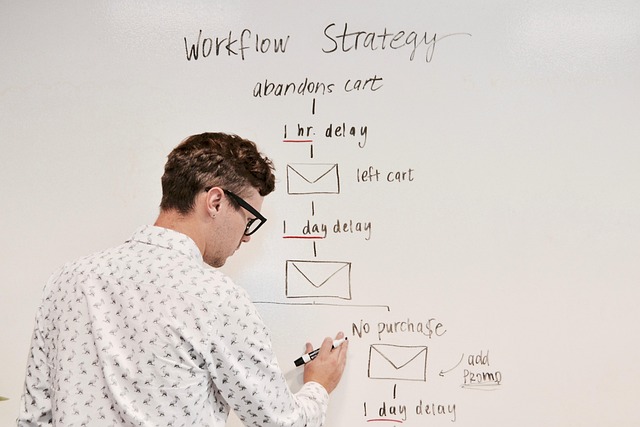
So, where do we go from here? We’ve established that getting users to open emails but not click is a common hurdle, not a dead end. Our team doesn't see it as a failure, but as a clear signal for optimization. It's about building on that initial engagement, turning an open into a genuine interaction. We’re consistently refining our approach, learning from every campaign, and ensuring our strategy is as dynamic as the market itself. This continuous loop of measurement, analysis, and optimization is how we consistently drive better results for our bottom line.
Our focus now is on deepening that understanding and maximizing every opportunity. We’re not just chasing opens; we're meticulously dissecting why people aren't clicking. It’s why we're always scrutinizing our email design, understanding what makes subscribers click, from button placement to visual hierarchy. And frankly, we can't stop at clicks; we need to see the full picture, which is why understanding revenue attribution for automation is so important to our bottom line. It helps us connect those clicks directly to tangible ROI, giving us the clarity we need to invest smarter.
We're moving beyond basic metrics. Our goal is to forge a deeper connection, where every open leads to a meaningful step forward for the user and for our business.
Looking ahead, our team's even exploring how AI tools, like those powering Blaze 2.0, can refine our messaging and targeting, making our calls-to-action even more compelling. And let's be real, none of this matters if our emails don't even land in the inbox; that's why deliverability tools, like Mailwarm 2.0, are on our radar for ensuring our efforts aren't wasted. We’re always asking: how can we make it easier, clearer, and more valuable for our audience to take that next step?
Ultimately, our commitment is to continuous improvement. We're dedicated to transforming those high open rates into high conversion rates. Our team believes in being true click partners with our audience, consistently earning every interaction. It's about understanding the nuances, adapting quickly, and always, always driving towards measurable results.
