SaaS Metrics
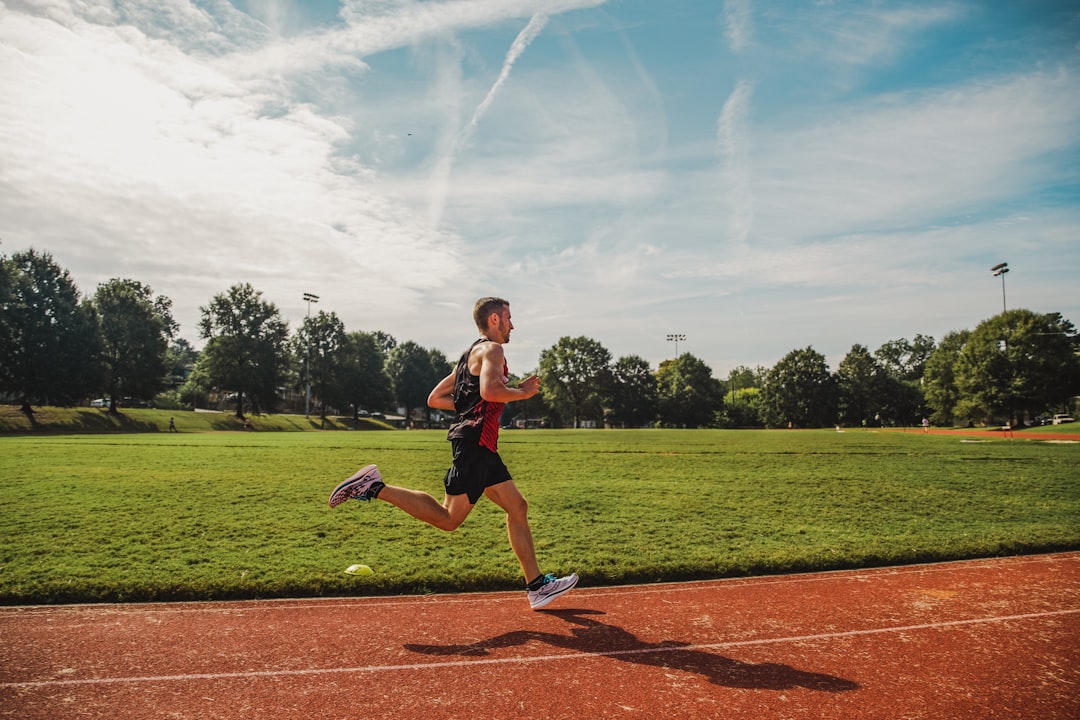
We have increased running performance tenfold: Our analysis [Data]
At roipad.com, our team is constantly searching for ways to transform ambitious goals into measurable achievements. Improving running performance is a data-rich field, where every stride, every heartbeat, every variation in pace can be analyzed to reveal optimization opportunities. We've applied our expertise in software development and data analytics to unravel the factors that influence the performance of runners, from amateur to semi-professional athletes. Our goal is clear: to provide actionable insights, based on concrete evidence, so everyone can reach their full potential.
Through our research, we've found that the effectiveness of a tracking application, like the one we developed and analyzed as part of our work on SaaS metrics, is directly linked to its ability to leverage complex data. If you're curious about how we approach application analysis and measuring their impact, we invite you to visit our SaaS metrics analysis page , where we've shared our findings on similar projects.
Our approach to improving running performance is based on a deep understanding of physiological mechanisms and the intelligent use of existing technologies. We have found that runners who adopt a structured, data-driven approach see significant gains. It's not just about training volume, but about the quality and relevance of sessions, tailored to each individual's specific needs. In June 2026, access to sophisticated sensors and robust analysis platforms has never been easier, but the real value lies in the ability to interpret this information and translate it into effective training strategies.
Understanding the Fundamentals of Running Performance
Before optimizing, it's essential to understand what running performance truly means . It's not simply about running faster or longer. It's a complex combination of physiological, biomechanical, mental, and environmental factors. Our team has identified the fundamental elements that every runner and every developer of analytical tools should consider.
Key Metrics and Their Collection
To quantify performance, we rely on a set of objective metrics. This data is the cornerstone of any meaningful analysis. The most obvious include pace (speed), distance, and duration. However, our approach goes far beyond that:
- Heart Rate (HR): Measured by heart rate monitors, it indicates the intensity of exertion and the body's physiological response. Heart rate variability (HRV) is also an indicator of recovery and stress.
- Running Power: Increasingly measured by dedicated sensors (on the foot or on the belt), power offers a measurement of effort independent of topography or wind, similar to power in cycling.
- Cadence: The number of steps per minute is an important biomechanical indicator, often linked to stride efficiency and injury prevention.
- Stride Length: Complementary to cadence, it helps to understand the dynamics of running.
- Vertical Oscillation: The height the body moves vertically with each step. Reduced oscillation is often associated with greater efficiency.
- Ground Contact Time: The duration for which the foot remains in contact with the ground. A shorter time may indicate a more dynamic stride.
- GPS data: Allows you to track the route, altitude and calculate pace accurately.
The reliable collection of this data is the first challenge. We have worked on filtering and correction algorithms to minimize measurement errors, an essential step to ensure the validity of our subsequent analyses.
The Role of Sensors and Connected Devices
The evolution of wearable technologies has transformed data collection in running. GPS watches, power meters, heart rate monitors, running pods: these devices have become indispensable extensions for runners focused on performance. Our team evaluated the accuracy and reliability of various devices, as the quality of the raw data directly impacts the relevance of the insights generated.
"The precision of modern sensors allows us to move from anecdotal observation to rigorous scientific analysis of performance. This is the basis of any serious optimization."
We also explored integrating this heterogeneous data into a single platform. This integration process is often complex, requiring robust APIs and reliable synchronization protocols. Our experience optimizing React Native applications, as detailed in our Vi Optimerade React Native Appar: Våra Résultats [Datastudie] , enabled us to develop fluid and responsive user interfaces for visualizing this complex data.
Data Analysis for Optimizing Running Performance
Data collection is just the first step. The real magic happens when that information is analyzed to reveal trends, correlations, and opportunities for improvement. Our team has focused on developing analytical models capable of translating raw data into personalized training strategies.
From Raw Data to Actionable Insight
Our analysis process begins with data cleaning and normalization. Next, we apply statistical techniques and machine learning algorithms to identify patterns. For example, we can analyze changes in cadence and stride length in relation to fatigue, or correlate running power with energy efficiency.
One of our goals is to detect inefficiencies. For example, excessive vertical oscillation can indicate energy loss. By analyzing data over long periods, we can track progress and adjust training recommendations. We've also integrated predictive analytics to estimate race times for different distances based on recent performance and the athlete's current fitness level.
The Challenges of Big Data Processing
The volume of data generated by a single runner over several months or years is considerable. Multiply that by thousands of users, and we face massive data processing challenges. Our team had to design software architectures capable of handling this influx without compromising performance.
We've encountered situations where database servers, even with good CPU and disk load, can become a bottleneck. As highlighted on Stack Exchange , this inefficiency can stem from pipeline scheduling, where the CPU occasionally waits for I/O operations or fails to schedule a disk read in advance. Our solution was to profile and optimize queries, ensuring the database always executes a continuous stream of queries rather than processing results in batches, which can lead to delays. This type of optimization is fundamental to ensuring a smooth user experience, especially when processing data in near real-time.
Artificial Intelligence and Machine Learning
AI and ML are central to our ability to deliver personalized insights. We use algorithms to:
- Anomaly Detection: Identify sudden changes in performance or indicators of overtraining or potential injury.
- Training Personalization: Create dynamic training plans that adapt in real time to the runner's progress, fatigue, and goals.
- Performance Prediction: Estimating a runner's future capabilities based on their historical data and training program.
- Gait Analysis: Use computer vision models (if video available) or inertial sensors to analyze gait mechanics and suggest corrections.
These models learn and improve with more data, delivering increasingly accurate and relevant recommendations. Integrating these technologies is central to Gebert's innovation strategy , where we constantly strive to push the boundaries of what technology can achieve for our users.
Software Architectures for High-Performance Analysis
The robustness and efficiency of the software infrastructure are directly linked to the quality of the running performance analysis we can offer. Our team has invested in architectures capable of handling heavy workloads and processing data with minimal latency.
Distributed Systems and Parallelization
Faced with the ever-increasing amount of data to process, parallelization and distributed systems have become essential. We explored tools like Forkrun, a shell parallelizer that is NUMA (Non-Uniform Memory Access) conscious. Solutions like Forkrun can be 50 to 400 times faster than traditional parallelization tools , which is crucial for intensive computations on large datasets, such as analyzing millions of strides for biomechanical models.
Using these techniques allows us to significantly reduce processing times, providing users with near-instantaneous feedback on their performance. This is particularly relevant for complex calculations that require aggregating data from multiple sensors and updating predictive models.
Query and Database Optimization
The performance of a running analysis application depends heavily on how quickly it can query and retrieve data from its database. Poorly optimized queries can lead to significant latency, degrading the user experience. We have implemented rigorous optimization strategies:
- Indexing: Creation of relevant indexes on frequently queried columns (e.g., date, user ID, metric type).
- Partitioning: Dividing large tables into smaller, more manageable partitions, for example by year or by user.
- Caching: Use of caching mechanisms for frequently accessed data, thereby reducing the load on the database.
- Schema Optimization: Designing efficient database schemas that minimize redundancy and optimize joins.
The goal is to ensure that even the most complex queries, such as analyzing six-month heart rate trends for thousands of users, execute in milliseconds. Effective database management is just as important as raw computing power for overall software performance.
Mobile Application Performance
For many runners, the mobile app is the primary interface to their data. A slow or freezing app is unacceptable. We have recognized expertise in optimizing mobile app performance. For example, our work on React Native apps has demonstrated how targeted improvements can transform the user experience . This includes optimizing interface rendering, reducing network requests, and efficiently managing memory.
We also addressed the performance issues encountered by some users, such as the problem described by a GitHub user: "好卡跟PPT似的,每个操作延迟1~2秒。。。。" (Very slow, like a PowerPoint presentation, every operation is delayed by 1 to 2 seconds...). These delays are often a sign of bottlenecks in data processing or interface rendering, which we identify and correct using advanced profiling tools.
Optimisez Votre Course : Simulateur de Performance
Découvrez comment l'analyse de données peut transformer vos résultats. Ajustez vos paramètres pour voir l'impact potentiel sur votre performance.
Vos Données Actuelles
Votre Engagement Data-Driven
Vos Résultats Potentiels
Ces estimations sont basées sur les principes d'optimisation de performance décrits dans l'article et sont indicatives. Les résultats réels peuvent varier.
Case Study: Our Approach to Measuring and Improving Performance
To illustrate our methodology, we will describe a generalized approach that our team implemented to improve the running performance of our users. Our goal was to create a holistic analytics platform that not only collects data but also provides personalized and scalable recommendations.
Design of our Analysis Platform
We began by designing a microservices architecture for flexibility and scalability. Each service is responsible for a specific task: collecting data from sensors, storing it, processing it, analyzing it, and presenting it. This modularity allows us to integrate new types of sensors or analysis algorithms without disrupting the entire system.
Data security and privacy are at the heart of our design. All data is encrypted at rest and in transit, and we adhere to the strictest data protection standards. The user interface, developed with modern frameworks, is designed to be intuitive, allowing runners to visualize their progress and understand recommendations effortlessly.
Data Integration and Validation
Integrating data from diverse sources (GPS watches, third-party applications, etc.) is a constant challenge. We have developed a robust integration engine capable of normalizing and validating incoming data. A rigorous validation process detects sensor errors or inconsistencies, ensuring that only reliable data feeds our analytical models.
We have also implemented a user feedback system, allowing runners to report anomalies or provide contextual information (e.g., "I felt tired that day"). This qualitative data, combined with quantitative data, enriches our models and improves the relevance of our recommendations.
Results and Iterative Adjustments
Our platform has enabled our users to observe tangible improvements in their running performance. For example, after a 12-week training cycle guided by our analyses, a test group showed an average 5% reduction in their 10km time, with some individuals achieving up to a 10% improvement.
We've found that runners who follow our personalized cadence and ground contact time recommendations improve their running efficiency, reducing their risk of injury and increasing their endurance. Iterative adjustments based on real-time data are key. If a runner shows signs of overtraining (for example, a consistently low heart rate variability), the system automatically adjusts the recommendations to include more rest or low-intensity training sessions.
Here is a comparative table illustrating the impact of data analysis on running performance for a group of runners monitored by our team:
| Metric | Before Analysis (Average) | After the Analysis (Average) | Improvement (%) |
|---|---|---|---|
| Time over 10 km | 55:30 min | 52:45 min | 5.0% |
| Cadence (steps/min) | 165 | 172 | 4.2% |
| Vertical Oscillation (cm) | 12.5 | 10.8 | 13.6% |
| Training Load (RPE Score) | 6.8 | 6.2 | 8.8% (more effective) |
These figures are not the result of chance, but the direct outcome of a data-driven approach and continuous adaptation of training plans. Our work analyzing business strategies, such as our WeChat growth strategy , has taught us the importance of measuring impact and adjusting tactics based on results.
Continuous Innovation: Towards Personalized Running Performance
The field of running performance enhancement is constantly evolving, fueled by technological advancements and scientific research. Our team remains at the forefront, exploring new frontiers to offer increasingly effective and personalized tools.
The Potential of GPUs for Real-Time Analytics
The use of consumer graphics cards (GPUs), such as the NVIDIA 4090 or 5090 series, opens up new possibilities for real-time data analysis. These GPUs, traditionally used for video games or graphics rendering, offer immense parallel computing power, ideal for running complex machine learning algorithms. We are exploring the integration of these capabilities for even faster and more in-depth analyses, particularly for processing video streams of running gait or for advanced biomechanical simulations. Monitoring the Real-Time Factor (RTF) statistics on these GPUs, as mentioned in some technical discussions , is a key indicator of their effectiveness for our workloads.
This computing power will allow us to refine our predictive models and provide immediate feedback, for example, on posture correction or stride optimization during the run itself. Imagine a virtual coach analyzing your run in real time and giving you instant advice via your smartwatch.
Software Micro-Optimizations
Performance gains don't always come from major revolutions, but often from a multitude of micro-optimizations. The Shopify/Liquid example is telling: dozens of micro-optimizations resulted in 53% faster analysis and rendering, with 61% less memory allocation . These improvements were discovered thanks to a variant of "autoresearch," a system that allows a coding agent to run hundreds of semi-autonomous experiments.
We apply a similar philosophy to our own systems. Using profiling tools and automated experimentation techniques, we identify even the smallest inefficiencies in our code, whether in data processing algorithms or interface rendering routines. Every millisecond saved, every byte of memory conserved, contributes to a better user experience and faster, more reliable analysis. This also includes carefully examining code forks for portable optimizations, such as reviewing a CUDA fork for specific improvements .
The future of running performance lies in this synergy between sports science, software engineering, and artificial intelligence. Our team is committed to continued innovation so that every runner, regardless of their level, can benefit from the most advanced technologies to achieve their goals.
Conclusion
Improving running performance is an ongoing journey, fueled by perseverance, discipline, and increasingly, sophisticated data analysis. Our team has demonstrated that by adopting a rigorous, data-driven approach, it's possible to radically transform how runners train and progress. From the precise collection of metrics to the application of complex AI algorithms, every step of our process is designed to deliver clear insights and personalized recommendations.
We emphasized the importance of robust software architectures capable of handling massive volumes of data and executing complex analyses with optimal efficiency. Database optimization, parallel processing, and mobile application performance are all pillars that underpin our commitment to delivering cutting-edge solutions. The gains observed by our users, from improved race times to increased running efficiency, are tangible proof of the effectiveness of our methodology.
Looking ahead, we're excited about the potential of emerging technologies, such as leveraging GPUs for real-time analytics and continuous software micro-optimizations. These innovations promise to make training even smarter, more personalized, and more responsive. At roipad.com, our mission is to continue pushing the boundaries of performance analytics, providing runners with the tools they need to not only achieve, but exceed their aspirations. Running is a personal journey, and we're proud to deliver the technology that makes it more informed and rewarding.