
Published on July 21, 2026
From Acquisition to Retention: Why SaaS Growth Has a New Engine
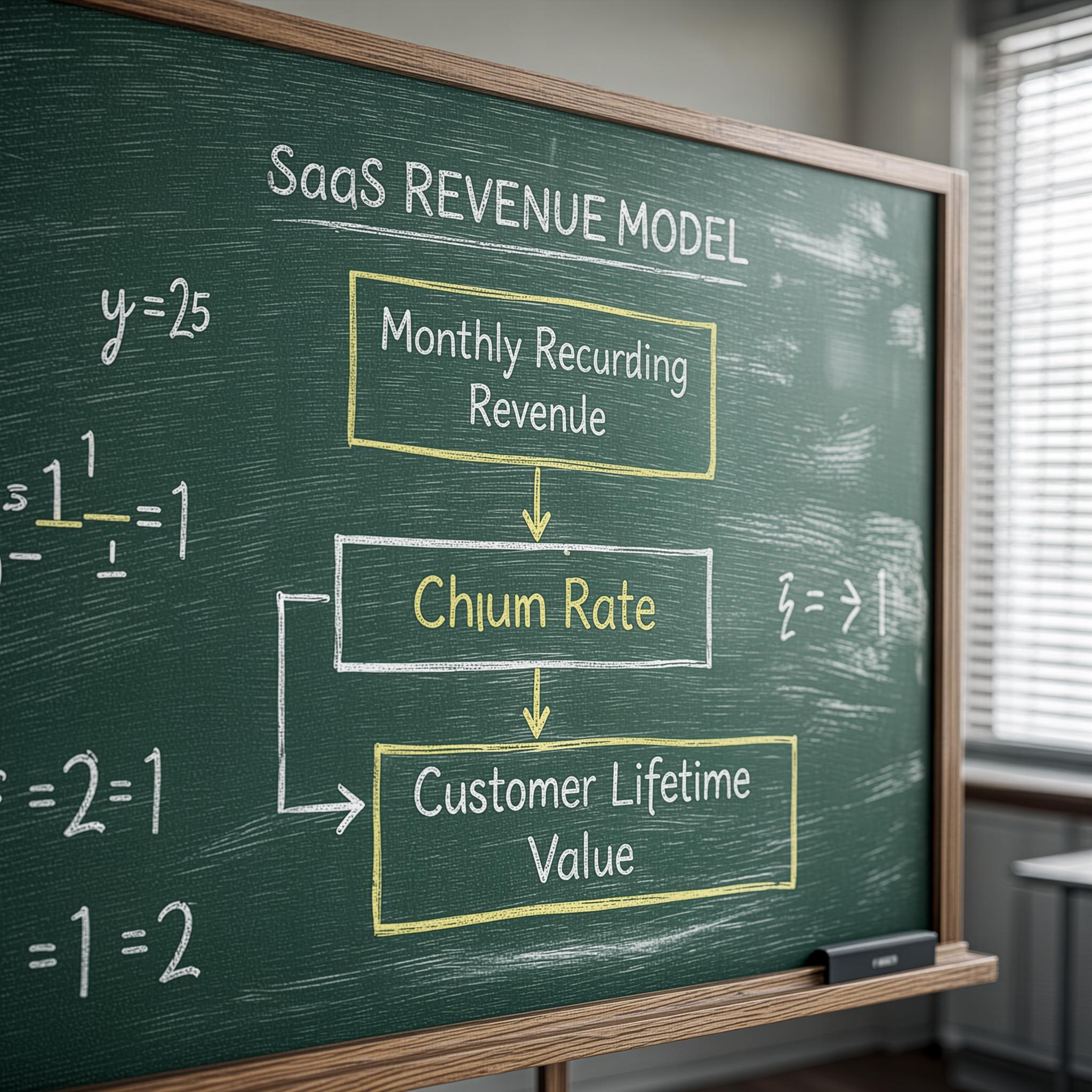
In the early days of SaaS, growth had a simple formula: spend money to acquire customers, watch recurring revenue accumulate, and scale. The math was straightforward. Build a product, run some ads, close some deals, and let the subscription model do its magic.
That formula is broken.
The cost of acquiring a customer in B2B SaaS is no longer just rising, it's taking longer to recover. CAC payback periods now range from 12 to 24 months, depending on contract value, which means capital tied up in acquisition can sit unrecovered for two full years. The median Sales and Marketing multiple in 2025 dropped to approximately 3x, roughly half the benchmark recorded in 2024. In plain English: SaaS companies are now generating half the revenue per marketing dollar compared to just a year ago.
Something has shifted. And if you're building or running a SaaS business today, understanding that shift isn't optional—it's survival.
The Economics of SaaS Growth Are Under Pressure
Let's start with the numbers that should keep every SaaS founder up at night.
According to the 2025 KeyBanc Capital Markets and Sapphire Ventures SaaS Survey, acquisition costs are climbing, payback windows are stretching longer, and the traditional playbook of scaling paid spend to generate pipeline is producing diminishing returns at nearly every stage of the funnel.
At the platform level, competition for B2B audiences has pushed costs to new highs. LinkedIn Ads now range from $5 to $15 or more per click, while Google Search Ads average $2.69 per click and Meta Ads for SaaS cost between $1.50 and $3.00 per click. But those figures only represent the cost of generating a visit. B2B landing pages convert at an average of just 2% to 5%, meaning the vast majority of paid traffic exits without ever becoming a lead.
Here's the kicker: even when paid media generates a lead, revenue is rarely immediate. B2B sales cycles range from 30 to over 180 days and involve multiple stakeholders across procurement, finance, and end-user teams. A campaign launched in Q1 may not show a meaningful revenue signal until Q3 or Q4.
The math just doesn't work like it used to.
This is why a fundamental rethinking is underway across the SaaS industry. As Forrester has noted, 73% of SaaS revenue is recognized post-sale, from existing customers. Yet many organizations still pour the majority of their resources into acquiring new logos while leaving post-sale operations fragmented, underfunded, and misaligned.
The Metric That Actually Matters: Net Revenue Retention
If there's one metric that separates thriving SaaS companies from struggling ones, it's Net Revenue Retention (NRR) .
Let's define our terms clearly:
Net Revenue Retention (NRR) measures how much recurring revenue a company retains from its existing customer base over a given period, including expansion revenue from upsells, cross-sells, and price increases. NRR can be anything from 0% to well above 100%. If your NRR is 110%, you're growing 10% year-over-year without acquiring a single new customer.
Gross Revenue Retention (GRR) is the same formula, but excluding upsells, cross-sells, and price increases. GRR cannot exceed 100%.
The difference between these two metrics tells you everything about your growth engine. High GRR means customers aren't leaving. High NRR means they're buying more.
Here's why this matters: McKinsey's analysis of more than 100 B2B SaaS companies found that top-quartile-valued B2B SaaS companies achieve NRR rates of 113 percent, meaning they grow 13 percent without adding any new business—while their bottom-quartile peers only reached an NRR of 98 percent. The valuation gap is staggering: top-quartile companies command a median enterprise-value-to-revenue multiple of 24x, compared with just 5x for bottom-quartile peers.
As McKinsey puts it, NRR "acts as a proxy for the strength of [a company's] loyalty". Companies with top-quartile NRR sustain higher valuations through both bull and bear markets.
The message is clear: retention isn't just a metric, it's a growth strategy.
The Churn Reality: What "Good" Actually Looks Like
So what does healthy retention actually look like in practice?
According to the 2025 Recurly Churn Report, the average churn rate for B2B SaaS companies is 3.5%, split between voluntary churn (customer-initiated cancellations) at 2.6% and involuntary churn (payment failures and billing issues) at 0.8%.
Industry benchmarks suggest that a "good" churn rate for B2B SaaS companies is generally considered to be below 1% per month, translating to an annual churn rate below 5%. Healthy SaaS churn typically falls in the 2-3% monthly range (24-36% annually), while at-risk SaaS churn is 5-7% monthly (60-84% annually).
But here's the nuance that most analyses miss: higher ARPU customers churn less, but only when onboarding, product value, and support scale with the complexity of what they're paying for. Customers paying more than $250 per month have the lowest churn rates, as these accounts often involve more complex onboarding, deeper integrations, and greater organizational dependencies that make switching costly.
Your pricing strategy influences not just revenue, but retention. High ARPU customers can deliver higher lifetime value and more predictable revenue—provided your product delivers enough ongoing value to justify the price.
Why "Lazy SaaS" Is Dying
There's a fascinating dynamic unfolding in the SaaS industry right now, and it's worth understanding because it affects every SaaS business.
For two decades, SaaS rode a favorable asymmetry: building internal tools was hard, integrations were messy, and even modest automation required developers and long timelines. Buying was faster and cheaper than building. That asymmetry fueled the explosion of SaaS into every corner of the enterprise stack.
AI is collapsing that asymmetry.
Large language models and agentic workflows can orchestrate APIs, move data between systems, generate interfaces, and automate business logic with a fraction of the engineering effort required even two years ago. The integration friction that once protected entire product categories is evaporating.
The vendors most exposed are not the deeply embedded enterprise platforms. They're the lightweight workflow layers—the products that essentially put a polished interface on top of accessible data and relatively straightforward processes. Reporting dashboards. Meeting tools. Narrow productivity applications. These products created value by simplifying implementation. That rationale is getting harder to sustain when implementation is no longer the real barrier.
As Adam Field writing in InfoWorld puts it: "SaaS will survive, but lazy SaaS is dead". The SaaS that survives isn't the one with the cleanest interface. It's the one that transfers operational risk customers genuinely cannot absorb themselves. Compliance. Regulatory certification. Accumulated domain expertise. Liability.
Think about compliant invoicing across 140 countries. That's not a workflow someone builds in a sprint. The certifications alone take years. Customers don't pay for that capability because it's technically complex. They pay because they cannot afford to own the risk of getting it wrong.
This is the distinction that matters: AI lowers the cost of building software. It does not lower the cost of absorbing risk.
The "SaaS Is Dead" Narrative Is Overblown
You've probably seen the headlines. "SaaS is dead." "The SaaSpocalypse." Dramatic phrases have dominated discussions in the IT world.
But that narrative is premature.
According to Deloitte, established software players will focus on becoming full-stack, end-to-end agentic platforms that can build, run, orchestrate, and govern agents across numerous functions. Traditional enterprise software continues to grow as it becomes more intelligent, agentic, and outcome-focused.
"The reality is far more nuanced than the sensationalistic language," said Ayo Odusote, Deloitte's software and platforms leader. "What's driving that narrative is change in how enterprise software delivers value, primarily due to the rise of agentic and AI-native capabilities".
The global SaaS market continues its rapid growth. Fortune Business Insight reports that it will reach $375 billion by the beginning of 2026**, while Precedence Research estimates the year closes out near **$465 billion. Beneath this headline growth, usage-based pricing and AI-driven consumption are rewriting the economics of every contract.
What's actually happening is a hybridization of the market. As Forbes notes, "SaaS isn't dead, it's just having an agentic makeover". The future belongs to platforms that can think and connect, not just perform.
Five Proven Strategies to Make Retention Your Growth Engine
So what do you actually do about all of this? Here are five strategies that work.
1. Treat Onboarding as Momentum Management, Not a Checklist
The first 90 days can determine long-term retention. Companies that win at onboarding treat it as a living, data-driven workflow. They instrument every step of the activation path, monitor where users get stuck in real time, and deploy targeted interventions—tooltips, behavioral emails, even live customer success calls, at the exact moments when users are most likely to drop off.
Clear onboarding playbooks and guided adoption ensure customers experience value quickly. As one customer success leader put it: "If you lose energy in the first 30–90 days, you're not just fighting churn, you're fighting indifference".
2. Monitor Product Usage in Real Time
Set triggers for declining logins, feature drop-offs, or usage plateaus. This isn't about spying on customers, it's about identifying when they're struggling before they churn.
Usage reports and triggered emails are two of the most powerful, scalable ways to accomplish this. When done well, they transform raw activity data into meaningful insights that drive retention and expansion. The companies that implement retention-first strategies report 35-45% improvement in annual net retention rates.
3. Build a Customer Success Function That Prevents, Not Just Reacts
Customer success determines whether customers renew, expand, and become advocates, or churn and damage your reputation. The highest ROI for prevention comes from focusing 80% of customer success efforts on avoidable churn.
This means automating involuntary churn recovery through dunning workflows and payment retries. It means building predictive health scoring that identifies at-risk accounts before they cancel. It means segmenting customers intelligently so you're not treating a $50,000 enterprise account the same way you treat a $50/month user.
4. Anchor Customers in Value—Continuously
McKinsey's research on top-quartile NRR companies reveals a crucial insight: you need to "anchor customers in value". This means having regular, outcome-based conversations that remind customers of the benefits of a continuing partnership.
The longer a customer stays, the more revenue is realized—making sustained engagement and satisfaction a direct business priority. This is what experts call "continuous uplift": staying ahead, identifying gaps, spotting new opportunities, and making it easy for your customers to grow with you.
5. Rethink Your Pricing Model
Pricing isn't just about revenue, it's about retention. Consumption-based and hybrid pricing models are becoming the SaaS standard, with 85% of companies already using or implementing usage-based strategies to better align revenue with product value.
Traditional per-seat pricing faces pressure as AI agents act as users. As BetterCloud's 2026 analysis shows, incumbents are charging 30% to 110% AI premiums on top of seat-based licenses—a "transitional tax, not a durable model".
The most effective enterprise SaaS pricing model is often a hybrid approach that combines a flat platform fee with usage-based overages. Customers increasingly expect pricing to be transparent, flexible, and tied to outcomes they can measure.
The Bottom Line
The SaaS industry is undergoing its most significant transformation since the subscription model itself was invented. The old playbook of spending heavily on acquisition and hoping retention takes care of itself no longer works. The economics simply don't support it.
The companies that will thrive are the ones that understand a fundamental truth: in subscription-based businesses, revenue isn't secured at the point of sale—it's earned over time.
This means shifting from acquisition-centric models to retention-led development. It means treating customer success as a strategic priority, not a cost center. It means building products that transfer risk, not just automate tasks. It means measuring what matters, NRR, not just new logos.
As the saying goes in SaaS: offense wins games, but defense wins championships. In today's market, retention is the defense that separates the champions from everyone else.
The question isn't whether SaaS survives. It's which SaaS survives. And the answer depends on whether you're building a feature or a fortress.
Want to dive deeper? Check out the full 2025 Recurly Churn Report for comprehensive benchmarks, McKinsey's analysis of NRR for the valuation connection, and BetterCloud's 2026 SaaS industry trends for the latest on where the market is heading.
About the Author
Industry
Business Intelligence
Product / Service
Product Positioning Software
Target Audience
SaaS developers and product founders
Related Posts

Vibe Coded a SaaS? Now What?
Angel Cee · Jul 22, 2026 · 64 views

How are AI startups evolving in 2026 and 2027?
Angel Cee · Jul 19, 2026 · 90 views
The Great SaaS Unraveling: What Nobody Wants to Admit About 2026
Angel Cee · Jul 24, 2026 · 79 views

The Dark Side of SaaS Growth: 17 Unconventional Black-Hat & Grey-Hat Strategies That Actually Work (And The Ones That Will Destroy You)
Angel Cee · Jul 22, 2026 · 37 views

Stop Building Software Like It Is 2025: The 20 Trends Dominating Startup Success This Year
Angel Cee · Jul 20, 2026 · 47 views
From App Only to Full Web Platform: How DiscountHub is Rethinking the Coupon Space
Angel Cee · Jul 07, 2026 · 85 views
Comments (0)
No comments yet. Be the first to comment!