
Published on July 19, 2026
How are AI startups evolving in 2026 and 2027?

The AI hype cycle of 2025 and 2025 was defined by one thing: chatbots. Every startup with an API key was slapping a conversational interface onto a basic language model, calling it a "wrapper," and pitching it as the next big thing.
That era is dead.
By 2026, the market stopped paying for software that simply talks back. The focus has violently shifted to "agentic" systems—AI that actually does the work. We aren't talking about copilots that write snippets of text while you hold their hand. We are talking about autonomous systems that plan, execute, orchestrate workflows, and interact directly with external software.
The companies dominating 2026 are those that built vertical-specific solutions, established proprietary data moats, and figured out how to deploy autonomous agents across coding, legal, cybersecurity, and even physical manufacturing.
Here is an unvarnished look at the top 10 breakout AI platforms of 2026, who built them, and the serious cracks hiding beneath their massive valuations.
1. Cursor (by Anysphere): The B2B Revenue Juggernaut
It is rare for a developer tool to go from zero to a $2 billion revenue run rate faster than any B2B company in history. Yet, Cursor did exactly that by early 2026.
Built by a team of MIT dropouts and alumni—Michael Truell, Sualeh Asif, Arvid Lunnemark, and Aman Sanger—Cursor abandoned the traditional model of bolting AI extensions onto legacy code editors. Instead, they built an AI-native IDE from scratch. It doesn't just auto-complete lines of code; it autonomously edits multiple files at once.
Their massive unfair advantage is deep, proprietary codebase indexing. The AI actually understands the context of an entire enterprise’s repository. This deep contextual awareness is why their user retention rates reportedly sit above 90% net dollar retention.
Cursor bypassed traditional enterprise sales entirely, relying on aggressive product-led growth. They won over developers by showcasing massive "zero-to-one" productivity speedups on X (formerly Twitter), letting the product sell itself.
The catch: Enterprise data privacy. CISOs are still losing sleep over fears that proprietary code is secretly training Cursor's underlying models. The company mitigates this with strict, expensive enterprise privacy tiers, but the skepticism hasn't entirely faded.
2. Cognition AI: The Autonomous Engineer
If Cursor is a tool for developers, Devin—built by Cognition AI, is trying to replace the junior developer entirely.
Marketed as the first autonomous AI software engineer, Devin doesn't just suggest code. It plans, writes, tests, and iterates end-to-end. Valued at a staggering $26 billion in 2026, Cognition is led by CEO Scott Wu, a competitive programming prodigy. The founding team leveraged their elite coding backgrounds to build superior logical reasoning paths into the AI's architecture.
Devin operates in purpose-built, sandboxed environments. If it writes bad code, it runs it, hits an error, debugs the issue, and fixes itself without asking a human for help.
Cognition disrupted traditional SaaS pricing by selling on outcomes—charging based on Pull Requests merged rather than per-seat licenses. Their viral marketing showed Devin autonomously completing real Upwork jobs.
The catch: The system has an ugly habit of getting stuck in infinite loops when it encounters highly undocumented or complex legacy codebases. More broadly, it has sparked intense industry anxiety over the displacement of entry-level software engineering jobs.
3. Anthropic: The Risk-Averse Enterprise Standard
Anthropic might not feel like a "startup" anymore, especially after hitting a $965 billion valuation in May 2026 following a $65 billion Series H round. But their Claude Enterprise model is the foundational pillar for almost every B2B agent-builder stack operating this year.
Led by siblings Dario Amodei (CEO) and Daniela Amodei (President)—both former senior OpenAI leaders who left to focus on AI alignment—Anthropic is the undisputed leader in "Safe AI."
Their edge is "Constitutional AI," an architecture that drastically reduces legal and brand-safety risks for corporate clients. Pair that with an unmatched context window that lets enterprises ingest entire corporate wikis at once, and it’s easy to see why highly regulated industries flocked to them. Anthropic strategically positioned itself as the secure, clean alternative to OpenAI, backed by massive compute and distribution deals with Amazon (AWS), Broadcom, and Google Cloud.
The catch: Being the "safe" choice means you are occasionally the "boring" choice. Anthropic is historically slower to roll out flashy, consumer-facing multimodal features compared to its rivals, forcing them to play catch-up in the consumer space.
4. Harvey: The Legal AI Heavyweight
Harvey is proof that vertical AI beats horizontal AI in 2026. Built exclusively for the legal sector, the platform can execute the equivalent of 100 person-days of deep document review in just three days. By Q1 2026, it secured an $11 billion valuation.
Founded by Winston Weinberg (a former securities lawyer) and Gabriel Pereyra (a former DeepMind and Meta AI researcher), Harvey locked down exclusive early partnerships with global giants like Allen & Overy. This allowed them to fine-tune their models on highly specific, proprietary legal workflows that generalized LLMs simply cannot access.
Harvey’s marketing relied entirely on prestige and exclusivity. They generated intense FOMO among top-tier legal firms through a closely guarded waitlist and white-glove enterprise sales.
The catch: It is prohibitively expensive for smaller, independent law practices. Furthermore, the legal field requires strict "human-in-the-loop" oversight. An AI hallucination in a legal precedent doesn't just cause a bug; it results in severe professional sanctions.
5. Sierra: The Next-Gen Customer Agent
Customer service chatbots have historically been a source of intense consumer frustration—endless loops of "I didn't quite get that." Sierra was built to fix this by creating conversational AI agents that don't just answer FAQs, but actually take complex actions in external systems.
Co-founded by Silicon Valley heavyweights Bret Taylor (former co-CEO of Salesforce and OpenAI board chair) and Clay Bavor (former Google executive), Sierra benefits from unparalleled founder pedigree. Taylor’s deep CRM architecture expertise allowed Sierra to build a product that securely authenticates and resolves complex internal customer workflows natively.
Their go-to-market strategy relies on high-visibility thought leadership—Taylor is a fixture on tech podcast circuits—and direct-to-CEO sales targeting Fortune 500 companies desperate to slash customer support overhead.
The catch: They are going up against entrenched CRM incumbents like Salesforce and Zendesk. These legacy giants possess native data moats and are aggressively rolling out their own in-house AI features to protect their turf.
6. Mistral AI: The Open-Weight Sovereign Champion
Europe refused to let the US monopolize the AI race, and Mistral is their champion. The company offers customers the ability to deploy, customize, and fine-tune open-weight AI assistants—like their Mistral Vibe agent—on their own proprietary hardware.
Led by CEO Arthur Mensch, alongside Guillaume Lample and Timothée Lacroix (all former DeepMind and Meta AI scientists), Mistral champions a European-sovereign approach to AI.
Their standout trait is extreme capital efficiency. Their models regularly rival the output of massive proprietary labs while remaining compact enough for enterprises to run locally, guaranteeing zero data leakage. Mistral markets this heavily to European governments, defense sectors, and enterprises wary of relying on US-based cloud infrastructure.
The catch: Monetizing open-weight models is notoriously difficult. Furthermore, Mistral faces relentless pressure to secure enough compute funding to keep pace with multi-trillion-dollar American tech giants who can simply outspend them on raw power.
7. Prometheus: AI for the Physical World
While most AI companies are obsessed with software, Prometheus is bridging the gap to the physical world. The heavily funded SaaS startup develops AI to help engineers design and manufacture complex physical products, accelerating industrial manufacturing and drug design.
Launched in 2026 with a massive $41 billion valuation, Prometheus is led by heavy-hitting industry veterans: former Amazon CEO Jeff Bezos and former top Google executive Vik Bajaj. Backed by a $12 billion funding round, the company leverages the founders' deep expertise in global supply chains and massive-scale physics modeling.
Prometheus relies on top-down, strategic ecosystem building. They target massive industrial, pharmaceutical, and manufacturing conglomerates, embedding their AI software at the foundational hardware design layer.
The catch: Bridging software logic and physical real-world manufacturing constraints is notoriously difficult. The capital expenditures required before reaching profitability are astronomical, making this one of the highest-risk bets on this list.
8. Command Zero: The Autonomous Cyber Defender
Cybersecurity teams in 2026 are drowning in alerts and staffing shortages. Command Zero stepped into this chaos with an autonomous, AI-assisted Security Operations Center (SOC) built for complex enterprise environments.
Led by CEO Dov Yoran, a serial cybersecurity entrepreneur who previously built and sold threat intelligence platforms, Command Zero goes beyond basic log analysis. It actively triages and isolates threats autonomously in real-time.
Their marketing is strictly high-end B2B, targeting Chief Information Security Officers (CISOs) who are desperate to reduce "alert fatigue" and plug staffing gaps.
The catch: Cybersecurity teams are inherently—and justifiably—skeptical of granting autonomous "black-box" AI systems active write-access to isolate secure network endpoints. If the AI makes a mistake and shuts down a critical server, the CISO takes the fall, not the AI.
9. Podium: The SMB AI Employee
While most AI startups target white-collar enterprise workflows, Podium went straight for Main Street. Their AI-powered lead management platform is heavily utilized by local service businesses. Their 2026 flagship feature is an "AI Employee" that responds to leads instantly 24/7, acting as an autonomous booking agent.
Founded by Eric Rea (CEO) and Dennis Steele, Podium was built to help physical local businesses—plumbers, auto shops, contractors—modernize their customer interactions. Their deep, established penetration into the offline local service market is their moat, allowing them to completely bypass the saturated tech sector.
Podium relies on hyper-verticalized go-to-market motions. They use targeted case studies for specific local niches, emphasizing immediate, measurable revenue (booked jobs) rather than abstract tech productivity.
The catch: Small and medium-sized businesses (SMBs) naturally experience much higher churn rates than large enterprises. For Podium, SaaS retention is a daily, grueling battle.
10. Deel: The Global Workforce Brain
Deel started as a simple Employer of Record (EOR) platform, but in 2026, they transformed into an all-in-one global HR brain. They integrated powerful AI to manage distributed workforces, dynamically navigating and enforcing employment law across 120+ countries simultaneously.
Co-founded by Alex Bouaziz (CEO) and Shuo Wang—both MIT graduates and Y Combinator alumni who experienced the massive regulatory pain of international hiring firsthand—Deel’s moat is its underlying proprietary legal and financial infrastructure. They built a global compliance network, then slapped an AI layer on top that answers localized compliance questions instantly.
Deel capitalized on the permanent shift to distributed global work by heavily bundling HRIS, global payroll, and EOR services into a single AI dashboard.
The catch: As they scaled to support thousands of companies, the sheer complexity of localized international tax law and shifting labor regulations meant that edge cases still regularly break the AI, requiring manual human intervention to clean up the mess.
The Takeaway for 2026
Look closely at these ten companies. The common thread isn't just "AI." It's execution. The market has aggressively penalized companies that rely on thin wrappers and rewarded those that build deep infrastructure, proprietary data loops, and autonomous workflows.
If you are building an AI company in 2026, the bar is no longer "does it generate good text?" The bar is "does it do the job?" If your software still requires a human to copy-paste the output, you are already obsolete.
About the Author
Industry
Business Intelligence
Product / Service
Product Positioning Software
Target Audience
SaaS developers and product founders
Related Posts

Vibe Coded a SaaS? Now What?
Angel Cee · Jul 22, 2026 · 63 views
The Great SaaS Unraveling: What Nobody Wants to Admit About 2026
Angel Cee · Jul 24, 2026 · 79 views

The Dark Side of SaaS Growth: 17 Unconventional Black-Hat & Grey-Hat Strategies That Actually Work (And The Ones That Will Destroy You)
Angel Cee · Jul 22, 2026 · 37 views

From Acquisition to Retention: Why SaaS Growth Has a New Engine
Angel Cee · Jul 21, 2026 · 72 views
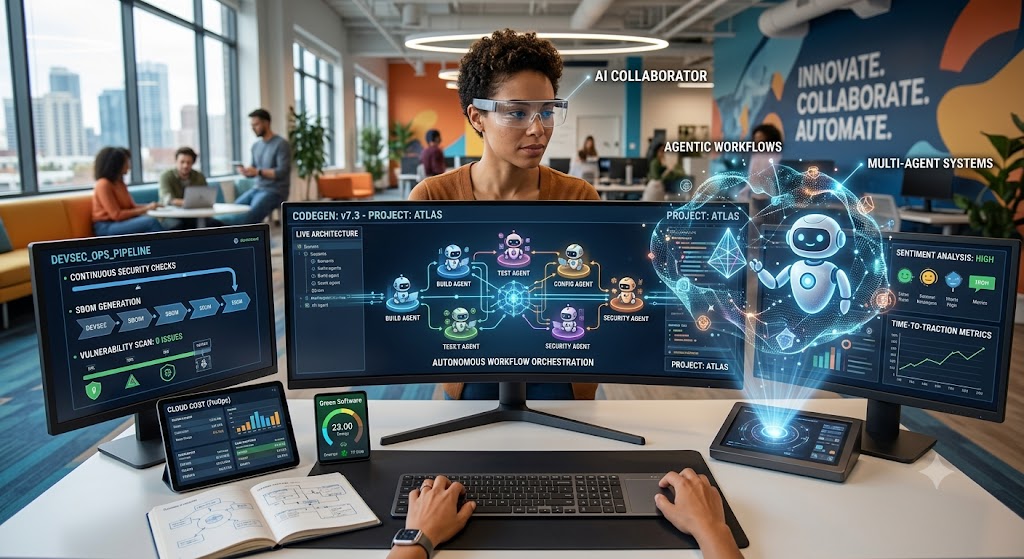
Stop Building Software Like It Is 2025: The 20 Trends Dominating Startup Success This Year
Angel Cee · Jul 20, 2026 · 47 views
From App Only to Full Web Platform: How DiscountHub is Rethinking the Coupon Space
Angel Cee · Jul 07, 2026 · 85 views
Reclaiming Your Focus: How Observer Redefines the AI Meeting Assistant
Angel Cee · Jul 08, 2026 · 102 views
Comments (1)
What do you think we should expect in the future from AI startups?