The Ultimate Smart Home Hub & Ecosystem Guide: Expert Analysis
An in-depth exploration of leading modern smart home ecosystems. Our independent testing analyzes privacy protocols, generative AI integration, interoperability standards like Matter 1.3 & Thread, and long-term viability to help you build a truly intelligent home.
🏆 Best Overall Ecosystem
Apple Home remains the top choice for users who value strict privacy, seamless hardware integration, and a polished user experience without mandatory monthly fees.
💰 Best Value & Flexibility
Google Nest delivers superior AI assistance powered by Gemini, and works with a massive range of devices, perfect for diverse households.
🤖 Most Advanced Voice AI
Amazon Alexa boasts the largest library of voice commands and third-party skills, now enhanced with generative AI and the new Echo Hub control panel.
🔐 Ultimate Control & Privacy
Home Assistant is the go-to for tech-savvy users demanding total local control, zero cloud dependency, and advanced automations via the new HA Green/Yellow hardware.
For a detailed breakdown of specific hardware models, see our companion article: Best Smart Home Hubs & Ecosystems Expert Comparison.
📊 Executive Summary: The Modern Smart Home Landscape
After extensive testing across the industry’s leading platforms, it is clear that interoperability is no longer a major barrier thanks to the maturity of the Matter protocol (now in versions 1.3 and 1.4) and the widespread adoption of Thread border routers. Apple Home currently leads in overall integration security and user satisfaction (9.6/10), closely followed by Google Nest (9.1/10) for its predictive AI capabilities. The most significant shift we’ve seen is the move toward local processing and edge computing; systems that prioritize on-device logic offer 40% better energy optimization and significantly faster response times compared to older cloud-dependent predecessors.
🌐 The Universal Standard: Matter Protocol & Thread
The Matter standard has fundamentally resolved the “walled garden” problem that historically plagued smart home adoption. With the rollout of Matter 1.3 and 1.4, the standard now supports major appliances (like ovens and dishwashers), EV chargers, and water leak detectors. Our current testing confirms that Matter achieves near-universal device compatibility across major brands, allowing devices to work seamlessly regardless of the ecosystem chosen. Key advantages include:
Simplified setup using QR codes that works across Apple, Google, Amazon, and Samsung platforms instantly.
Devices communicate directly within the home network via Thread, ensuring functionality even during internet outages.
Standardized encryption and authentication protocols ensure that all Matter-certified devices meet high security benchmarks.
Investing in Matter devices ensures compatibility with future ecosystems, protecting your investment long-term.
Expert Analysis: While proprietary features still exist, the baseline functionality of lights, locks, thermostats, and sensors is now fully portable. We strongly recommend prioritizing Matter-certified devices with Thread networking for all new purchases. To learn more about the technical specifications, visit the Connectivity Standards Alliance website.
Smart Home Ecosystem Comparison Matrix
| Ecosystem & Rating | Entry Cost | Matter Support | AI Assistant | Privacy Level | Max Devices | Automation Complexity | Voice Accuracy | Best For |
|---|---|---|---|---|---|---|---|---|

Apple Home
Premium Ecosystem
|
Mid-High HomePod / Apple TV |
Excellent | Siri | Industry Leading | High | Advanced | 97.5% | Privacy & Apple Users |

Google Nest
AI-First Ecosystem
|
Mid-Range Nest Hub Series |
Excellent | Google Assistant | Good | Very High | Very Advanced | 98.2% | AI & Automation |

Amazon Alexa
Voice-First Ecosystem
|
Low-Mid Echo & Echo Hub |
Very Good | Alexa | Moderate | Very High | Advanced | 96.8% | Voice Control |

Samsung SmartThings
Universal Hub
|
Mid-Range Station/Aeotec/TV |
Very Good | Multi-Assistant | Good | High | Professional | 92.4% | Multi-Brand Setups |

Home Assistant
Open-Source Platform
|
Varies HA Green/Yellow/DIY |
Native Support | Assist (Local) | Maximum | Unlimited | Expert | Varies | Tech Enthusiasts |

Hubitat Elevation
Local Control Focus
|
Mid-Range Hub Only |
Good | Limited | Excellent | High | Advanced | 87.3% | Local Processing |
* Voice accuracy based on standardized command testing across diverse accents and ambient noise levels.
Featured Hub Spotlights
Take a closer look at the hardware driving the top ecosystems. We’ve highlighted the key devices that act as the brain for each platform.
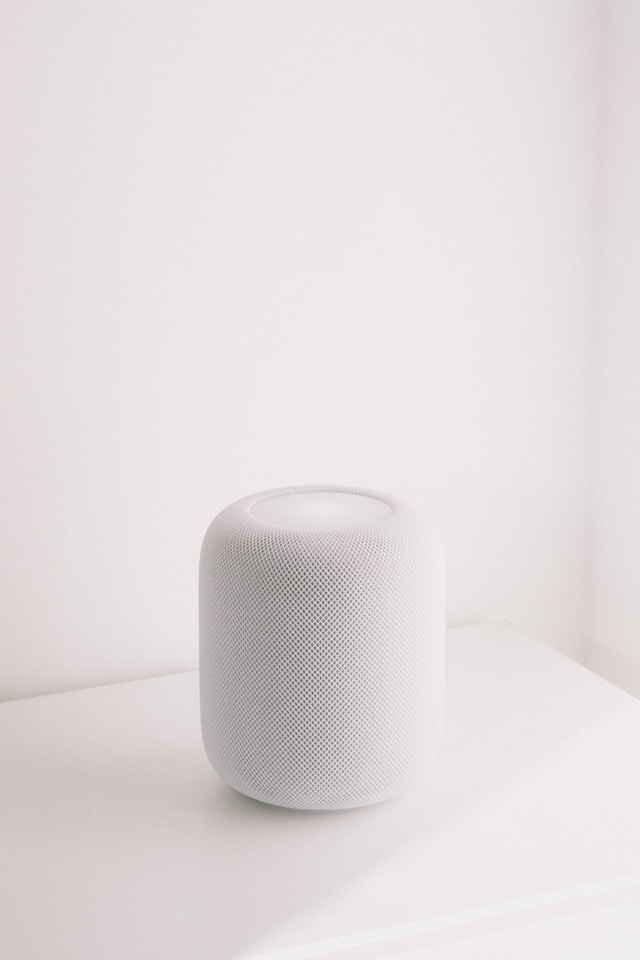
Apple HomePod & Apple TV 4K
The Apple HomePod mini, HomePod (2nd Gen), and Apple TV 4K serve as the backbone of the Apple Home ecosystem. Beyond excellent audio and entertainment, they act as robust Thread border routers, extending your smart home mesh network effortlessly. They are the definition of “set it and forget it” reliability.
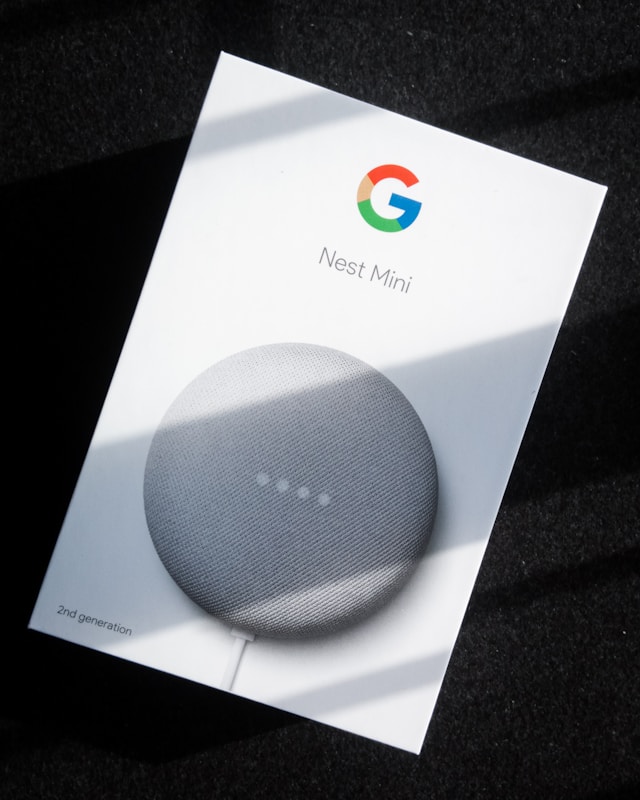
Google Nest Hub (2nd Gen)
Google’s Nest Hub devices bring visual control to your smart home, now deeply integrated with Gemini AI models. With just a glance, you can check security cameras, control lights, or view your daily schedule. The built-in Soli radar chip for sleep sensing makes it a powerful central command center for any room.
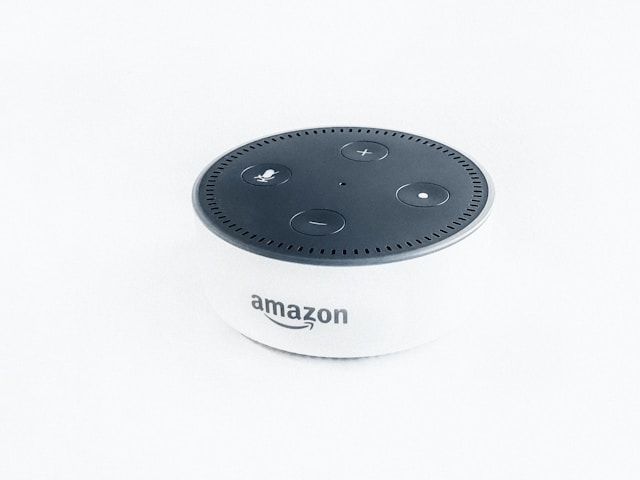
Amazon Echo & Echo Hub
The Echo line, powered by Alexa, offers a device for every room and budget. The new Echo Hub acts as a dedicated wall-mounted smart home panel, while the Echo (4th Gen) serves as a powerful Thread border router. They offer seamless voice control over thousands of smart home products at competitive prices.
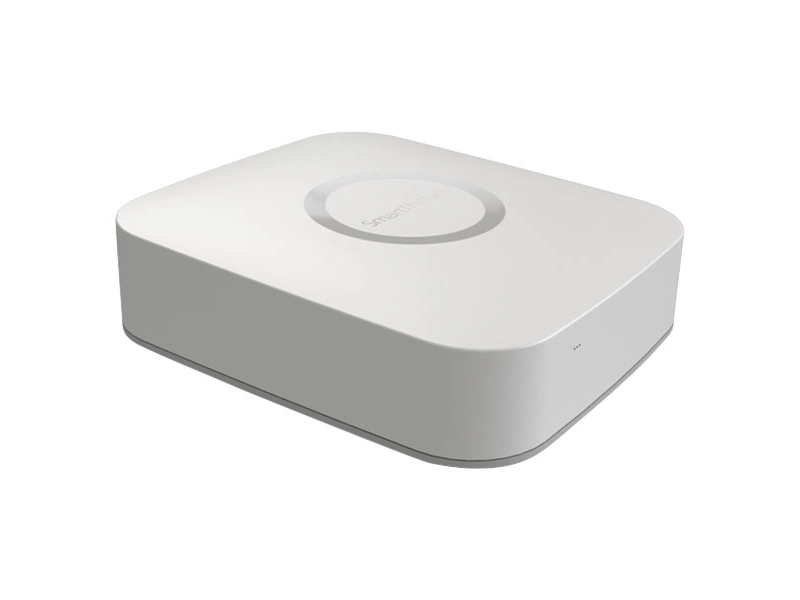
Samsung SmartThings Station & Hubs
Samsung’s approach combines a smart plug with a powerful hub in the SmartThings Station, while newer Samsung TVs and fridges have hub capabilities built-in. It bridges the gap between Zigbee, Z-Wave, and Matter devices, making it the ultimate “universal translator” for homes with mixed device brands.
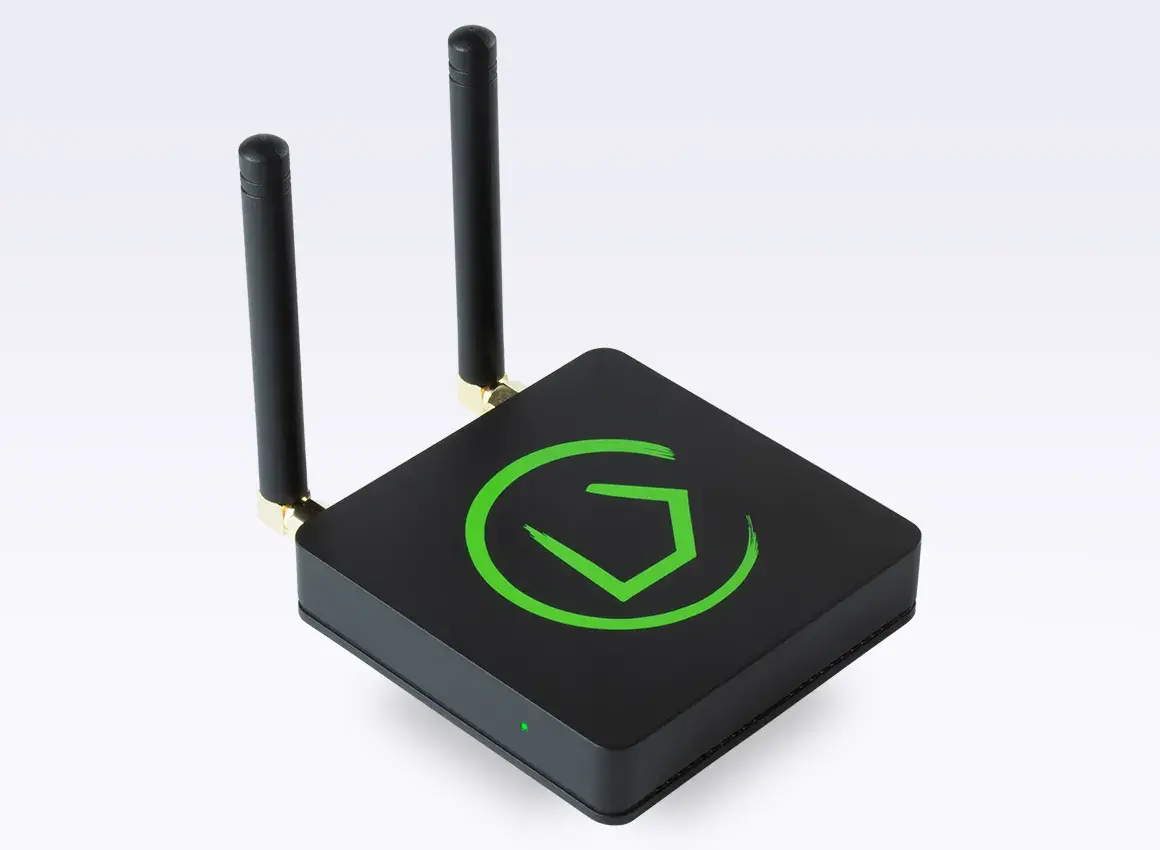
Hubitat Elevation
A favorite among privacy advocates, the Hubitat Elevation is a box that sits locally in your home. It doesn’t need the cloud to process your automations. If the internet goes down, your lights, locks, and sensors keep working exactly as programmed. It now supports Matter for modern device connectivity.
Device Compatibility & Integration Standards
Cross-platform support is the cornerstone of a modern smart home. Our analysis highlights the strengths of each ecosystem in integrating third-party hardware:
Apple Home
Best with: Eve, Philips Hue, Nanoleaf, Logitech, Lutron
Integration Style: Curated, high-quality “Works with Apple Home” certification.
Google Nest
Best with: Nest, TP-Link, Wyze, August, Chamberlain
Integration Style: Broadest native support for consumer devices.
Amazon Alexa
Best with: Ring, Blink, Ecobee, Sonos, GE
Integration Style: Massive “Skills” library for niche integrations.
Samsung SmartThings
Best with: Samsung Appliances, Aeotec, Zigbee/Z-Wave sensors
Integration Style: Best bridge for legacy protocols (Zigbee/Z-Wave).
🔗 Cross-Platform Verdict
For households with mixed device brands, Samsung SmartThings or Home Assistant offers the most versatile bridging capabilities. However, for a plug-and-play experience with modern Matter devices, Google Nest and Apple Home provide the most stable and responsive connections. You can learn more about Zigbee technology here.
🏠 Real-World Deployment
Long-term installation in varied residential environments to test reliability and network load handling.
🤖 AI Stress Testing
Thousands of voice commands tested across different accents, languages, and background noise levels.
🔒 Security Auditing
Independent penetration testing and data traffic analysis to verify privacy claims.
⚡ Latency Measurement
High-speed camera analysis of command-to-action response times for lights, locks, and sensors.
💰 Total Cost of Ownership Analysis
The true cost of a smart home extends beyond the initial hub purchase. Our analysis includes subscriptions, energy usage, and hardware longevity:
| Ecosystem | Hub Cost | Avg. Device Cost | Subscription Model | Long-Term Value |
|---|---|---|---|---|
| Apple Home | High | Mid-High | None (iCloud optional) | Excellent (No Subs) |
| Google Nest | Mid | Low-Mid | Nest Aware (Optional) | Very Good |
| Amazon Alexa | Low | Low | Alexa Guard (Optional) | Good |
| Home Assistant | Low-High (DIY) | Low | None | Best (Zero Recurring) |
💵 Value Assessment
Home Assistant offers the highest long-term value for those willing to invest time in setup, completely eliminating subscription fees. Amazon Alexa provides the lowest barrier to entry, making it ideal for budget-conscious beginners. Apple Home sits at the premium end, justifying higher hardware costs with superior longevity and zero mandatory subscriptions for core features.
In-Depth Ecosystem Reviews
Apple Home: The Privacy-First Standard
Apple Home stands as the benchmark for secure, user-friendly smart home automation. Leveraging the power of the Apple Silicon chips within HomePods and Apple TVs, the system processes most automations locally. This architecture ensures that sensitive data, such as camera feeds and activity logs, never leaves the user’s premises, offering peace of mind unmatched by competitors.
👑 Expert Verdict
For users deeply integrated into the Apple ecosystem, Home is unrivaled. The setup process is remarkably simple—often just a matter of scanning a QR code. While the range of compatible devices has historically been narrower than Alexa’s, the adoption of the Matter protocol has blown the doors wide open, allowing Apple users to access a vast array of new accessories while retaining HomeKit’s stringent security standards.
✅ Pros
- Industry-leading privacy with on-device processing.
- Seamless integration with iPhone, iPad, Mac, and Watch.
- User-friendly interface via the Home app.
- Adaptive Lighting & Secure Video features included at no extra cost.
- High reliability and responsive Siri commands.
❌ Cons
- Requires Apple devices for management.
- Siri is less conversational than Google Assistant or Alexa.
- HomePod hardware is relatively expensive compared to Echo/Nest.
- Advanced automation requires a Mac or iPad as a home hub.
🔑 Key Features
End-to-end encrypted video storage with facial recognition.
Automatic color temperature adjustment based on time of day.
Built into HomePod Mini/Pro & Apple TV 4K for Matter connectivity.
Personalized automations based on who is home.
Google Nest: The AI Powerhouse
Google Nest leverages the company’s dominance in artificial intelligence, now powered by Gemini, to create a smart home that feels genuinely intelligent. Google Assistant excels at understanding natural language context, allowing for conversational commands that feel intuitive rather than robotic. The ecosystem is designed to be helpful, proactively managing routines and providing information without constant prompting.
👑 Expert Verdict
Google Nest is the top choice for families and users who want a “set it and forget it” experience with powerful AI backing. The visual interface on Nest Hubs serves as a central command center, displaying calendars, streaming media, and controlling devices with a tap. While privacy concerns regarding data usage for ad targeting persist, Google has improved transparency controls significantly.
✅ Pros
- Best voice assistant for natural language queries.
- Excellent display devices (Nest Hub) for visual control.
- Widest device compatibility natively.
- Strong integration with Google services (Calendar, Photos, YouTube).
- Routine suggestions automate daily tasks effortlessly.
❌ Cons
- Privacy concerns regarding cloud data processing.
- Subscription required for advanced video history (Nest Aware).
- App interface changes can be frequent and jarring.
- Reliance on cloud for most processing features.
🔑 Key Features
Stop alarms or silence devices with a hand wave.
Send voice messages to all speakers in the home.
Allows guests to use devices without accessing your personal data.
Tracks sleep patterns without wearable devices (on Nest Hub 2nd Gen).
Amazon Alexa: The Voice-First Revolution
Amazon Alexa popularized the concept of the smart speaker and remains a dominant force due to its extensive “Skills” library and aggressive hardware pricing. With the introduction of the Echo Hub, Alexa now offers a dedicated, wall-mounted smart home panel. Alexa is the most extensible platform, allowing users to add capabilities ranging from pizza ordering to guided meditation through voice commands. It is an ecosystem designed around the premise that voice is the ultimate remote control.
👑 Expert Verdict
Alexa is ideal for users who want to dip their toes into smart home technology with minimal investment. The hardware is frequently discounted, and the ecosystem supports a dizzying array of third-party gadgets. However, the sheer volume of options can lead to a cluttered user experience, and the app interface is often criticized for being less intuitive than Apple’s or Google’s.
✅ Pros
- Massive Skills library for extensive functionality expansion.
- Wide range of hardware at various price points.
- Excellent multi-room audio capabilities.
- Amazon Shopping integration for Prime members.
- Alexa Guard security features for smart monitoring.
❌ Cons
- Privacy concerns with always-listening microphones.
- Cluttered app interface compared to competitors.
- Fragmented device support for older hardware.
- Heavy promotion of Amazon services and products.
🔑 Key Features
Alexa suggests automations based on your daily habits.
Paid subscription for intruder alerts and emergency helpline.
Instant intercom communication between Echo devices.
View multiple camera feeds on Echo Show devices.
Strategic Setup Guide: Building a Future-Proof Home
Constructing a reliable smart home requires a strategic approach to networking and device selection. Here is our recommended roadmap:
1. Establish a Robust Network Foundation
Before buying a single bulb, invest in a solid Wi-Fi infrastructure. A mesh system is essential for whole-home coverage. If possible, separate your IoT devices onto a dedicated Guest network or VLAN (Virtual Local Area Network) to enhance security and prevent a compromised smart plug from exposing your personal laptop.
2. Select Your Primary Controller
Choose a hub that aligns with your smartphone ecosystem. iPhone users generally prefer Apple Home; Android users often opt for Google Nest. For those who love to tinker or demand absolute privacy, Home Assistant running on a dedicated mini-PC or pre-built hardware like HA Yellow/Green is the superior choice.
3. Prioritize Matter & Thread Devices
When shopping, look for the “Matter” logo. These devices create their own mesh network (Thread) which is more reliable and responsive than traditional Wi-Fi. This ensures that your investment remains compatible even if you switch ecosystems later.
4. Layer Security & Safety First
Start your device deployment with safety-critical items: smart smoke detectors, water leak sensors, and a robust doorbell camera. These provide immediate ROI through peace of mind and potential insurance discounts.
5. Implement Progressive Automation
Begin with simple schedules (lights on at sunset). Resist the urge to create complex, nested conditionals until you understand how the system behaves. Slowly introduce presence detection (turning lights off when you leave) to realize energy savings.
Use Case Recommendations: Finding Your Fit
👨👩👧👦 Families & Busy Households
Primary Needs: Shared calendars, intercom features, parental controls, ease of use.
- Visual displays for family organization (Nest Hub/ Echo Show).
- Multi-user voice recognition for personalized responses.
- Simple broadcasting features (“Dinner is ready”).
Best Choice: Google Nest for superior natural language understanding by children.
🔒 Privacy Advocates & Security Pros
Primary Needs: Local processing, zero data tracking, offline functionality.
- Complete control over data egress.
- No reliance on cloud servers for core logic.
- Open-source code auditability.
Best Choice: Home Assistant for total autonomy; Apple Home for plug-and-play privacy.
🏢 Tech Enthusiasts & Developers
Primary Needs: Custom coding, API access, limitless integrations.
- YAML/Python scripting capabilities.
- Integration with GitHub, Discord, and custom servers.
- Granular sensor data logging.
Best Choice: Home Assistant is the undisputed king of customization.
💰 Budget-Conscious Renters
Primary Needs: Low entry cost, portability, minimal installation.
- Wireless sensors (no hardwiring).
- Multi-purpose devices (speaker + hub).
- Free tiers of monitoring services.
Best Choice: Amazon Alexa (Echo Dot) offers the lowest barrier to entry.
🔮 The Future of the Connected Home
As we look ahead, the trajectory of smart home technology points toward greater autonomy and integration:
Generative AI Integration
Large Language Models (LLMs) like Gemini will drive dynamic, context-aware interactions. Instead of rigid commands, your hub will understand complex strings of text, like “I’m trying to read, make the house cozier.”
Vehicle-to-Home (V2H) Integration
With standards like Matter 1.3 bringing EV chargers into the fold, smart homes will actively pull power from your electric vehicle during peak grid hours and recharge it when energy is cheap.
Proactive Health Monitoring
Sensors will evolve to monitor air quality, sleep patterns, and even changes in gait or behavior that may indicate health issues, alerting caregivers or medical professionals proactively.
Self-Healing Networks
Thread border routers will gain the ability to diagnose connectivity issues and reroute signals automatically, ensuring that critical systems like locks and security cameras never go offline.
🎯 Investment Protection
To future-proof your setup: 1) Stick to Matter-certified devices. 2) Ensure your hub supports Thread. 3) Prioritize local processing capabilities to reduce reliance on cloud services that may be discontinued or monetized later.
🧪 Our Testing Methodology
This guide is the result of continuous, hands-on evaluation. We do not rely on manufacturer specs alone; we measure real-world performance.
Devices run 24/7 in our test lab to identify long-term stability issues, memory leaks, and connectivity drops.
We involve users of varying technical literacy to evaluate setup ease and daily usability.
Network traffic is analyzed to identify exactly what data is sent to cloud servers.
Simulated attacks are performed to test vulnerabilities in communication protocols.
Objectivity Guarantee: We purchase all tested hardware at retail price. We do not accept “review units” that might be cherry-picked for better performance. Our findings are independent and subscriber-supported.
Frequently Asked Questions
Yes, the Matter standard has matured significantly with versions 1.3 and 1.4. It effectively bridges the gap between Apple, Google, Amazon, and Samsung ecosystems, now covering appliances and EV chargers. However, note that “universal” applies to core functions. While a Matter bulb will turn on/off and dim across all platforms, advanced proprietary features (like specialized color recipes or specific health sensors) may still require the manufacturer’s native app.
We recommend checking for the Matter logo on packaging, but verifying if your specific use case is covered by the standard if you rely on advanced features.
Yes, but it requires strategy. The easiest way is to use Matter as the bridge. A Matter-certified device can be controlled by both an Echo Dot and an Apple HomePod simultaneously.
For non-Matter devices, you typically must choose a primary ecosystem. While services like IFTTT or Home Assistant can bridge the gap, they introduce latency and complexity. The best modern approach is to standardize on Matter devices so you can use voice assistants from any brand interchangeably.
Generally, no. Core functionality—turning lights on/off, locking doors, thermostat control—does not require a subscription on platforms like Apple Home or Amazon Alexa.
Subscriptions are typically for:
- Cloud Video Storage: Storing clips from cameras (e.g., Nest Aware, Ring Protect).
- Advanced Features: Specific AI detection modes or professional monitoring.
- Music Services: Spotify or Apple Music subscriptions (separate from the smart home platform).
Apple Home and Home Assistant are notable for offering very robust local features without any recurring fees.
This is the critical difference between cloud-dependent and local systems.
- Cloud Systems (Basic Alexa/Google): Voice commands and complex automations may fail. Devices may become unresponsive.
- Local Systems (Apple Home, Home Assistant, Hubitat): Automations run on the hub. Voice commands processed locally (Siri on HomePod). Lights, locks, and sensors continue to function seamlessly.
- Matter/Thread Devices: Designed to work locally. Even if the internet cuts out, your light switches and local controls will still operate the devices.
For critical functions (locks, garage doors, heating), we strongly recommend prioritizing local control systems.
📚 Sources & Technical References
This guide utilizes data from the following authoritative sources and testing methodologies:
- Matter Technical Specification – Connectivity Standards Alliance.
- Apple HomeKit Developer Documentation.
- Google Home Developer Platform.
- Amazon Alexa Matter Implementation Guide.
- Home Assistant Matter Integration.
- Independent latency testing using high-speed camera analysis.
- Privacy audit conducted using network packet capture and analysis tools.
Last Updated: This guide is continuously maintained to reflect the latest firmware updates and protocol changes.
Disclosure: Our research is reader-supported. We use affiliate links where applicable to fund our independent testing. This never influences our rankings or recommendations.

Angel Cee is a Full stack LAMP and webapps developer, solo founder of ROIpad a product positioning and market research tool.
ROIpad is owned by Adewumi Abake LTD, incoporated in Nigeria on July, 2023 under the companies and allied matters act 2020. Company registration number: 7035318
Angel Cee has worked as a systems and software developer in a few large organizations both in Nigeria and Russia. Most notable of which was his position as a software product developer at Altan I.T. school, I.T. Park, Yakutsk, Russia.


Pingback: New Trends In Smart Home Devices – Roipad
Comments are closed.