The blogging industry is changing fast! 2026, going into 2027, how can you win or stay on top of the charts?
This is a very comprehensive guide for newbies in blogging, SaaS founders trying to build organic distribution for their products and, but not limited to webmasters who are already winning in their niche or looking at exploding and expanding their portfolio. This blog post is based on my own personal experience growing organic traffic for our product positioning SaaS product (ROIpad).
Infrastructure is everything.
You hardly get to see this part in any blogging and organic traction development playbook which is the biggest reason why newbies feel those playbooks don’t work. Maybe they do, but the reality in 2026 is that search engines are not going to waste their crawling budget on your slow website. This will be more pronounced in 2027. If your website or blog is often offline or experience a lot of outtages, then this makes it evern worse!
I have been quite busy lately, but at the same time, I want to provide comprehensive value as much as possible. Because explaining this entire process requires detail, I will be breaking it down and publishing a part each night. The first strategy I will be talking about right now is the website’s core architecture itself. This is what most people often overlook, but it is the absolute foundation for everything. If the foundation is faulty, no amount of SEO wizardry or backlinking can save you. If your site is slow, suffers from huge blocking times, or experiences frequent server outages, Google and other search engines will reduce your crawl budget to near zero.
Essentially, this means they do not value your website and will not crawl it as often as they crawl your competitors. Website speed is just as important as backlinks in Google SEO factors; perhaps, in this current climate, it is even more important. Millions of web pages are appearing on the internet every single day. Search engines need to constantly recrawl existing pages while discovering new ones. They value their bandwidth immensely and will not waste it waiting on a slow, unresponsive website.
Most people looking at my website for the first time always take note of the speed, especially regarding the public pages. When I first started, I knew I would have to custom code everything. All analytics, tracking scripts, backend, frontend, I coded and implemented everything from scratch. I made each page to be very responsive and efficient, which is why I rely heavily on indexes in my database schemas. WordPress is horribly slow! It is over-bloated with features you would never need for an average blog, yet those features contribute to blocking time and other metrics that kill speed. WordPress was never an option for me as I am building a digital product, a SaaS. However, I did consider hosting my blog on WordPress briefly but quickly realized I was better off coding everything with vanilla PHP from scratch to achieve the kind of speed and sophistication I desire.
Every single plugin on WordPress these days is trying to make a premium customer out of you. You often have to install a free plugin and then face constant upsells for its premium version—argh! With AI, people are making leaner, faster websites, and those websites are seeing love from search engines, while WordPress bloggers are getting stuck in the past.
But the framework alone is only half of the story. Most people trying to rank their websites or blogs only treat it as a side hustle. I think you need to find a way to add a premium digital product to it so you can treat it as a full-time hustle. For instance, if you are still hosting on Truehost or shared hosting, these small hosting sites springing up in Nigeria without credibility or history—ask yourself: if you had a thousand-dollar-a-month business, would you put it in the hands of these hosting companies? I know they are cheap, and that is exactly why search engines do not take you seriously. My platforms are on a VPS (Virtual Private Servers) and run on Contabo infrastructure and data centers.
Contabo is probably the most affordable VPS hosting company out there, offering 32 terabytes of bandwidth each month for a monthly subscription of about $5. My server could be online for years with not a single outage. I have been setting up clients on Contabo for years without issue. However, coming from a Cpanel dashboard to a VPS is tough! It has its own learning curve, but it is completely worth it. You cannot expect Google to trust your slow WordPress website on some cheap Nigerian hosting and grant it a higher SEO score when compared to my lean, fast, efficient website running on a virtual private server in a German data center!
When making websites and blogs for my clients and I recommend custom coding, they are often worried about the cost, not realizing the long-term benefits and the unlimited opportunity it presents. My articles and content are on automated mode, yet they are very high quality. With so many updates to Google over the years, especially updates designed to filter out mass-generated useless AI content, do you think Google would index 500 pages in one day if they didn’t find the articles worthy? I basically just sleep and let the server make research, create fantastic content based on what is ranking on Google, fetch my Search Console reports, and fix problems. Everything runs on PHP and Python codes on my server while I sleep or focus on other things. What is crazier? Everything is running on the free quota of Gemini 2.5 Flash; I am not paying Gemini for anything.
You cannot execute such complex processes on WordPress without spending thousands of dollars in custom plugin development and modifying several core files. That would be counter-intuitive because, by the time you are done, you would have a highly modified custom WordPress instance that is essentially a completely different fork of the original repo.
Content is still King but find a way to automate it.
You know how people kind of always tell you that AI contents will ruin your site and all that debate about if search engines accept and rank AI contents? well the answer is more nuanced but bloggers and webmasters who found the right way to automate their contents are the 2027 winners and here’s why;
When people say Google and other search engines do not accept contents generated with artificial intelligence (AI) I simply wonder if these people know that Google and other search engines does not accept human generated contents either if they are badly produced. I mean long before AI became mainstream, people were still seriously struggling with getting their contents indexed or staying indexed with so many blogs getting penalized for poor and/or thin contents. Bottom line is quality, what the finished content look like is a hundred percent more important than how it was produced or generated. In fact, in 2027, the how is no longer relevant! the end now justify the means, it does not matter if you scooped the contents from thin air or you paid a thousand dollars for each paragraph, the most important metric is that they are high quality finished content that provides true value, very helpful and can keep readers or viewers engaged for as long as possible, the longer the better. It is in this context that we must emphasize the importance of original contents as well.
Think about it this way, while your competitors are spending weeks crafting a handful of posts manually, you could be dominating entire topic clusters in a matter of days if you master automation. The algorithm does not care about the sweat on your brow; it cares about satisfying the user intent. If an automated system can research, structure, and publish a comprehensive guide that answers a user’s query better than a hurriedly written human post, the algorithm will reward the automated one every single time. The winners of the future are those who have mastered the art of scaling quality without scaling effort, effectively turning their content pipeline into a high-performance engine that runs twenty-four hours a day.
However, do not mistake this for a license to churn out spam, because that is the fastest way to kill your domain. The distinction lies in the sophistication of your automation. You are not just pumping out text; you are building a system that synthesizes data, identifies gaps in the current search results, and fills them with precision. Google is getting smarter at detecting fluff regardless of its origin, so your automated pipeline must be fine-tuned to add genuine insight, perhaps by integrating real-time data or proprietary statistics, rather than just rewording what already exists. When you automate with the intent to solve problems rather than just fill pages, you stop being a mere content creator and start becoming a digital media powerhouse, and that is exactly how you secure your future in the ever-evolving organic traffic world.
How we did it?
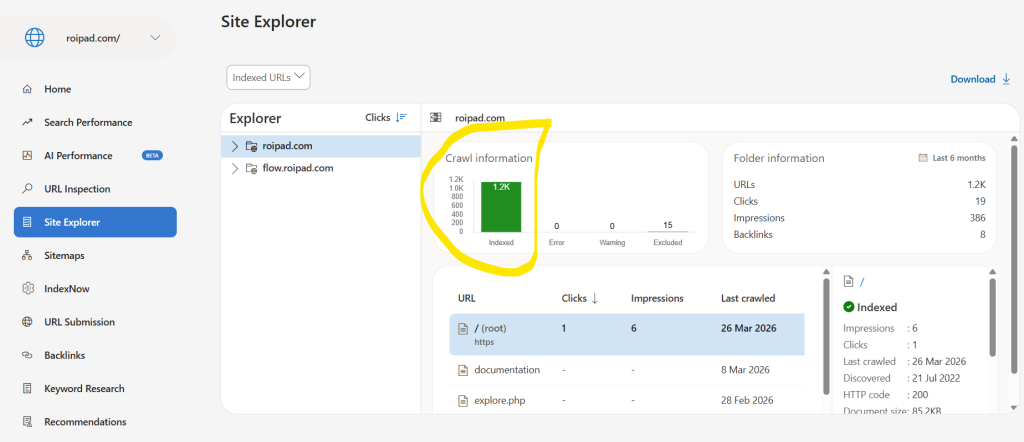
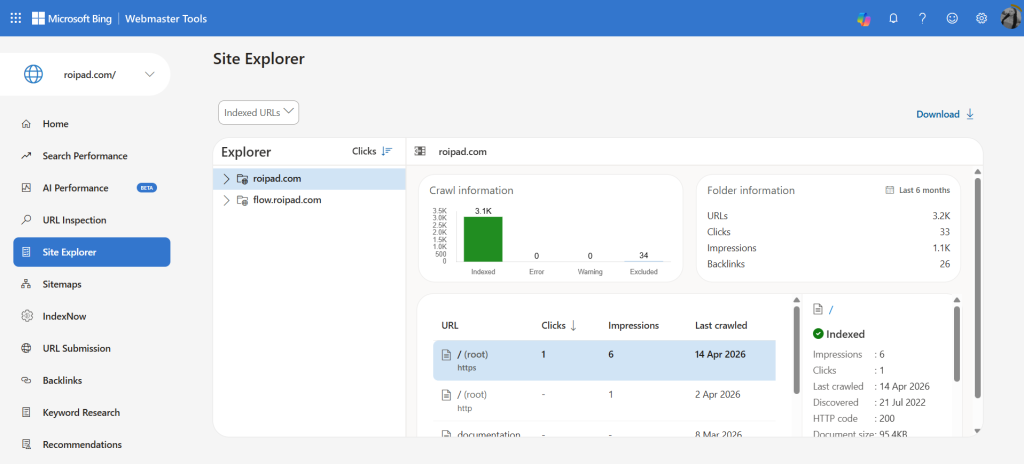
We were able to index over 3.1k pages on Bing within our first three months and about 900 pages on google!
We perfected our automation and started ranking on Google in just under a week, seeing exponential traffic growth while we are still in our third month, even with a brand new domain name. People often say new domains have to wait months in the sandbox, but our results prove that if you bring enough value and technical superiority, you can force your way through the gates almost immediately. We achieved this by building a system that does not just create content, but actively researches, verifies, and optimizes itself without human hand holding.
The core of our operation is data. We do not just guess what to write; we collect data from over 22 distinct sources to understand the competitive environment. We utilize the Nomic text embedding Python library to perform semantic relationship vector embeddings on this data. In simple terms, this allows our system to understand the meaning and context behind keywords rather than just matching words. We have an infrastructure performing relentless research on keywords and traffic gaps in our niche. When new keywords are surfaced, the system feeds them to a cron job that performs semantic relationship analysis, discovers all related external sources, and packages them as a comprehensive payload to Gemini. This payload includes any prior specific admin or editor messages, such as “ensure the article is in German.” Gemini then returns a well structured, humanized article. We have developed special humanizing prompts and regex instructions to ensure articles are properly written to meet our strict standards, so it never feels like a robot wrote it.
However, the real magic happens in our quality assurance layer. We have another automation dedicated to checking articles to ensure they meet standards and do not trigger errors in Google Search Console and Bing Webmaster Tools. Should an article be discovered to be subpar or have an error in Bing or Google, the article is flagged instantly. Another agent then researches the error, makes recommendations, performs semantic relationship maths again against all recent data, and sends it back to Gemini for corrections or to our PHP correction logics based on what the error entails. This hard proof mechanism ensures we have a solid automated process to churn out high quality articles and ensures those articles do not run wild. In fact, using this method, we were able to index over 1200 articles on Bing in our first month and 3.1k articles by the third month! By the third month, we also have about 900 articles on Google! This massive indexing volume on a new domain shows that our process is very effective and that the search engines trust our technical infrastructure.
But it does not stop there. Ranking is one thing, but dominating is another. We have agents constantly fetching data from our Google Search Console, analyzing pages doing well, queries we are ranking for, and the ones that are performing and could perform better with more internal support. These agents ensure we do retargeted content creation using those queries and linking back to the respective pages or posts for those queries. This further solidifies the SEO quality of those queries and pages. This ensures that should we have an article that starts performing, we can quickly solidify its rank further and dominate the topic. By constantly reinforcing our own content network based on real performance data, we tighten all SEO angles perfectly and create an almost impenetrable authority on the subjects we cover.
Domain name matters
Why Your Domain Name Matters More Than You Think
Beyond the architecture and the content automation, there is another critical factor that gave us a head start, and that is the domain name itself. In the world of SEO, a domain name is not just an address; it is a historical asset. When we acquired roipad.com, I was not aware of its full history. I registered it by chance in 2025, completely unaware that it had a previous life. It turns out the domain was originally registered back in 2018, and Bing had already discovered and indexed it as far back as 2022. The previous owner let it expire around 2023, and it sat dormant until I picked it up. This was a massive stroke of luck for us!
Because the domain already had a footprint, we did not suffer the usual “sandbox” period that brand new domains often face. When we plugged it into our system, Bing recognized it immediately. In our Bing Webmaster dashboard, we still see the date “Discovered in 2022,” which signals to the search engine that this is an established entity, not a fleeting startup. This little historical nugget gave us an immediate trust boost. Search engines, especially Bing, tend to trust older domains with a history of being online more than they trust a domain registered yesterday. It is like buying a house; a house built in 1990 with a clean title feels more permanent than a tent pitched this morning.
This is exactly why seasoned publishers and SEO experts often skip registering fresh domains entirely. Instead, they go to platforms like ExpiredDomains.net to hunt for domains that have just expired. They are looking for that exact same advantage we got by accident: age and pre-existing trust. When you buy an expired domain, you might also inherit existing backlinks that the previous owner built, giving you an instant authority boost that would otherwise take you years to build from scratch. If you can find a clean expired domain in your niche, you are essentially starting the race ten meters ahead of everyone else. For roipad.com though, we did not inherit any backlink.
However, finding the perfect domain name is a skill on its own, and it is a dangerous game if you do not know what you are doing. The expired domain market is filled with landmines. You could end up buying a domain that looks perfect on the surface, but has a horrific history of spam, adult content, or malware. If a domain was previously used by a spammer and subsequently penalized by Google, buying it is like buying a toxic asset. You will spend months trying to clean up the mess and disavow bad links, and search engines might have already blocked the IP or deindexed the domain entirely from their records. You absolutely must do your due diligence. You need to check the web archive history, run the IP through blacklists, and analyze the backlink profile before you spend a dime. If you get it right, the rewards are immense, but if you get it wrong, you are building your castle on a swamp.
How to Buy a Good Expired Domain…
How to Buy a Good Expired Domain
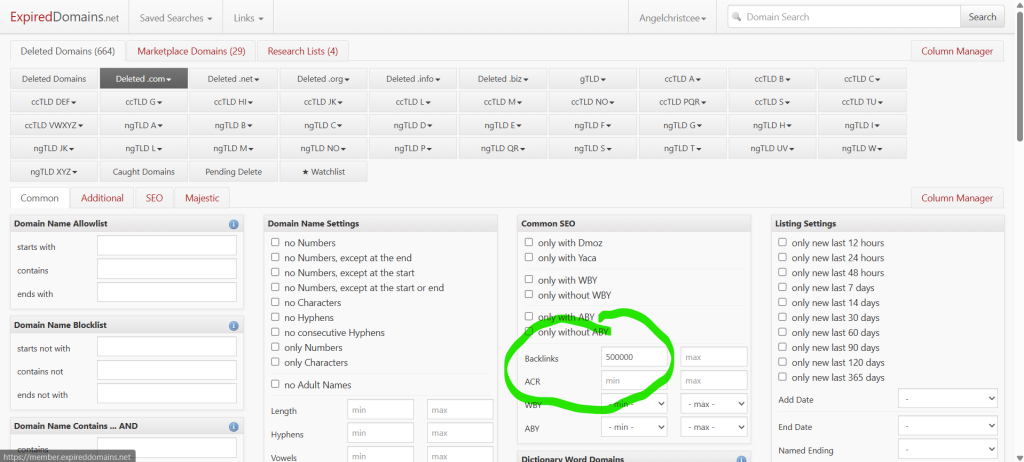
If you decide to go the route of buying an expired domain to gain that initial edge, you cannot just pick one that sounds catchy. You have to treat it like a forensic investigation. The first place most of us start is ExpiredDomains.net. It is the industry standard for filtering through the millions of domains that drop every day. When you are on the platform, you will see a dashboard filled with abbreviations, and knowing exactly what they mean is the difference between buying a digital asset and buying a liability.
The most critical metrics you need to look at are the Majestic and Moz columns. You will see DA and PA, which stand for Domain Authority and Page Authority. These are Moz metrics that predict how likely a website is to rank on search engine result pages. They are scored on a scale from 1 to 100, with higher scores indicating a greater ability to rank. However, do not let these numbers fool you completely, as they can be manipulated. You need to look deeper at the Majestic metrics: CF and TF. CF stands for Citation Flow, which measures the volume of links pointing to the domain. TF stands for Trust Flow, which measures the quality of those links. This ratio is vital. If a domain has a Citation Flow of 40 but a Trust Flow of 5, run away! That discrepancy usually means the domain was spammed with thousands of low quality backlinks. You want a domain where the Trust Flow is somewhat close to the Citation Flow, or at least respectable, because that tells you the previous backlinks came from reputable sources.
Once you find a domain with good metrics, the next step is verifying its history. You simply cannot skip this. You need to use the Wayback Machine, hosted at archive.org. This is the most reputable digital archive on the internet. Type the domain name there, and you will see a calendar of every snapshot taken of that website over the years. Click through the snapshots. What did the site look like in 2019? Was it a legitimate business blog? If you see a snapshot that looks like a page full of gibberish text, adult content, or pharmaceutical spam, that domain is toxic. Even if the metrics look good now, if the history shows it was used for spam, Google likely has a permanent black mark against it. You want a clean history where the site was consistently relevant to your niche or at least a neutral business.
Finally, you must check for historical deindexing and spam penalties. A domain might look clean on the surface but could be currently deindexed by Google. You can perform a simple manual check by searching for “site:domainname.com” on Google. If the domain has existing pages but nothing shows up in the results, that is a huge red flag that Google has removed it from its index. Additionally, you can use tools to check the anchor text distribution of the backlinks. If the anchor text is full of unrelated keywords like “cheap shoes” or “casino bonus” and the domain is about technology, that is a spam signature. The goal is to find a domain that was a legitimate authority site which simply expired because the owner forgot to renew it or went out of business, not one that was discarded because it was burned by penalties.
What to Do After You Secure the Domain?
First, a crucial clarification regarding the buying process on ExpiredDomains.net. The data they provide is strictly for informational purposes. You do not have to buy the domain directly through their platform or use their specific backorder services if you do not want to. Once you spot a domain that fits your criteria and see that it is available, you can simply head over to your favorite registrar, whether that is Namecheap, GoDaddy, or even your preferred local registrar, and register it there. This often saves you money and keeps all your domains in one convenient dashboard. Just ensure you check the availability on your registrar’s site immediately because good domains get snapped up fast.
Now, let’s talk about the heavy lifting. Buying the domain is the easy part, but if you think you can just buy an expired domain, put up a simple landing page, and watch the traffic roll in, you are mistaken. The value of an expired domain lies entirely in its backlink profile, and capturing that value requires meticulous manual labor. You cannot just rely on the homepage authority. Most of the time, the valuable backlinks are not pointing to the root domain (the home page). They are deep links pointing to specific inner pages like olddomain.com/seo-guide or olddomain.com/services. If you just set up your new site and ignore these old URLs, visitors hitting those links will get a 404 error, and search engines will eventually drop those links because they lead nowhere. You would have wasted the very asset you paid for.
To fix this, you need to audit the backlink profile using tools like Ahrefs or Moz to see exactly which URLs have the most authority pointing to them. Once you identify these high-value pages, you have two options. The best option is to recreate the content on those exact same URL paths. You can use the Wayback Machine again to see what the old content was about, write a fresh, high-quality version of that article, and publish it on the exact same URL slug on your new installation. This ensures the backlink remains contextually relevant and passes maximum “link juice” to your site.
If you cannot recreate the page because the topic is irrelevant to your new niche, the next best thing is a targeted 301 redirect. You should map those old, authoritative URLs to the closest relevant page on your new website. Do not just redirect everything to the home page! Google treats mass redirects to the root as a soft 404, meaning they essentially ignore the redirect and you lose the SEO benefit. You must match the intent. If the old link was about “blue shoes,” redirect it to your “blue shoes” category page. This process of mapping old URLs to new ones and recreating content is tedious, I will admit, but it is the only way to truly inherit the power of the expired domain and hit the ground running.
Language is the hidden secret of SEO in 2027!
Breaking the Language Barrier for Easy Wins
One of the biggest secrets to our rapid growth, and something very few bloggers are leveraging effectively, is our aggressive expansion into non-English markets. We are not just ranking in English; we are actively writing and ranking in French, Spanish, German, and even Estonian. The reason for this is simple: the English internet is completely saturated. It is a bloody battlefield where every keyword, no matter how obscure, has ten different high-authority websites fighting for the top spot. You are competing with giants who have million-dollar budgets and decade-old domains. Trying to rank a new site purely in English is like trying to shout at a rock concert; nobody is going to hear you.
However, the moment you switch to other languages, the playing field changes dramatically. In languages like German or French, the competition drops significantly, but the search volume remains surprisingly high. Even more extreme is a language like Estonian. We found that in these markets, the competition is almost non-existent. Most local businesses in these regions have terrible websites with zero technical SEO. They are not optimizing for speed, they are not building backlinks, and they certainly are not using advanced content automation. By deploying our high-speed architecture and sophisticated content pipeline into these languages, we are essentially bringing a nuclear weapon to a knife fight. We are providing better, faster, and more comprehensive answers than the local competitors, and Google rewards us instantly for it.
Google does not care what language the content is written in, as long as it satisfies the user’s intent. The algorithm is smart enough to understand quality in Spanish just as well as it does in English. By creating content in these languages, we are tapping into huge audiences that are desperate for information but have very few quality sources to choose from. We are seeing traffic spikes that would take us years to achieve in English happening in just weeks. It is a classic arbitrage strategy. We take the high standards of English SEO and apply them to markets that are lagging behind. While everyone else is fighting over English keywords, we are quietly dominating entire niches in Europe and beyond, capturing traffic that our competitors do not even know exists.

It is a game of time
The Long Game: Why Patience is Your Ultimate SEO Weapon
Looking ahead to 2026 and beyond, the reality of the search market is that only those who can persevere and wait will truly dominate the organic traffic world. We need to be very honest about this: blogging or building organic distribution for any SaaS or digital product is a waiting game. Things often take time to mesh, even with a massive push from expired domains, high quality backlinks, and superior architecture. You cannot rush trust. You can have the fastest server and the best content, but search engines still operate on a timeline of accumulation. They need to see consistency over time before they fully commit to ranking your pages at the top.
When you are creating new content, especially at scale, it takes time for programmatic SEO to kick in effectively. Using us as a case study, our automation systems are actually still weak right now compared to where they will be in a year. Their very architecture means that they only get stronger as more and more contents are indexed. The system needs data to learn. It needs to see which articles are getting clicks, which ones are ranking, and which ones are being ignored. This gives the system more metrics to learn and iterate from. As we publish more, the semantic relationships become tighter, the keyword gaps become easier to spot, and the content quality compounds. The first month might feel slow, but by the third month, the system is operating on a level of intelligence that a human simply cannot replicate manually.
This is why quality automation is king. It would be hard to imagine competing with AI agents and sophisticated data and research backed content creation pipelines in 2027 as a solo writer. The sheer volume of data processing required to stay relevant is just too high. You cannot manually analyze 22 data sources and calculate vector embeddings for every single article while you sleep. If you try to do this manually, you will be left behind by publishers who have built automated engines that run twenty four hours a day. You need a system that can do the heavy lifting for you, refining your content strategy based on real time feedback loops that you could never manage on your own.
However, do not let this reality discourage you. While things take time, the payoff is massive if you stick with it. If you build your foundation correctly and stay consistent, six months is enough to be onto something massive. The first few months are about building that trust and feeding your system the data it needs to get smart. Once you cross that threshold, the growth becomes exponential. The people who win in 2027 will be the ones who started building their automated infrastructure today and had the discipline to wait for the compounding effect to take over.

The Trap of Early Monetization: Why You Must Wait
There is a massive mistake I see new publishers making all the time, and it kills their trajectory before the rocket even leaves the launchpad. That mistake is rushing to monetize with advertising way too early. I cannot stress this enough: if your blog or website is actively growing, do not slap ads on it immediately. I know the temptation is real. You see a few hundred visitors a day, and you start calculating how much you could make if you just added a few banner ads. But this is a trap. It is a short-term mindset that will absolutely slow down your growth and stop your website from reaching its full potential.
When you introduce third-party advertising scripts to a website that is still trying to establish authority, you are essentially injecting poison into the very foundation you are trying to build. Most ad networks, especially the low-tier ones that accept new websites with low traffic, have terrible scripts. They are heavy, bloated, and unoptimized. They add significant weight to your page load times and drastically increase your Cumulative Layout Shift (CLS). If you recall our earlier discussion on architecture, you know that speed and stability are paramount. By adding these scripts, you are actively degrading the user experience. Search engines like Google pick up on this immediately. If your page shifts around because an ad is loading slowly, or if your content takes three seconds longer to read because an ad script is blocking the render, Google will notice. They will throttle your rankings because you are offering a worse experience than a competitor who is ad-free.
Furthermore, placing ads on a site that is still trying to build trust looks amateurish. It signals to both the user and the search engine that your primary goal is extraction, not value. When a user lands on a new domain and is immediately bombarded with pop-ups or banner ads, their instinct is to bounce. High bounce rates send negative signals back to the search engine algorithms, telling them that your content is not satisfying the user’s intent. This creates a negative feedback loop. You stunt your growth for pennies. The revenue you generate from a few thousand visitors a month is negligible compared to what you could make if you let that traffic compound into the hundreds of thousands.
While monetizing early with low-tier networks is tempting, the real strategic play is to build for the “exit”—the moment you qualify for premium ad management. Traditionally, this meant waiting until you hit the daunting 50,000-session-per-month milestone for networks like Mediavine or Raptive (formerly AdThrive).
However, the landscape changed significantly in January 2026. Mediavine launched Journey by Mediavine, a program specifically designed to bridge the gap for smaller creators.
The Strategic Shift: Monetizing at 1,000 Sessions
The barrier to entry has effectively vanished. As of early 2026, Mediavine has lowered the entry threshold for its Journey program to just 1,000 monthly sessions. This is a massive departure from the previous 10,000-session requirement for their entry-level tier.
By entering the Mediavine ecosystem via Journey, you gain access to the same high-end ad technology and “Grow” first-party data tools used by the biggest sites on the web. This allows you to:
- Establish a Clean Data Baseline: Using the Grow plugin early helps you collect first-party data, which is crucial as third-party cookies disappear.
- Graduate Naturally: Once your site reaches $5,000 in annual ad revenue, you are automatically funneled into the Mediavine “Official” tier, bypassing the traditional traffic gates.
- Focus on Performance: Because Mediavine requires strict compliance with Core Web Vitals, joining Journey forces you to maintain a “lean, mean, high-speed machine” from day one.
Why Quality Over Speed Still Wins
Despite it being “easier” to get in, the strategy of holding out for quality remains superior. Premium networks yield significantly higher RPMs (Revenue per Mille) because they have direct relationships with high-paying advertisers who avoid “spammy” or slow-loading sites.
| Feature | Journey by Mediavine (Entry) | Mediavine Official (Mid-Tier) |
|---|---|---|
| Traffic Req. | 1,000 sessions / month | $5k Annual Revenue (or 50k sessions) |
| Tech Stack | Grow Plugin + Script Wrapper | Full Ad Management + Video Player |
| Revenue Share | 70% to Publisher | 75% to Publisher |
| Main Focus | Growth & Data Collection | Maximizing RPM & Scaling |
The “monetization trap” used to be joining a low-tier network because you couldn’t hit 50,000 sessions. In 2026, the trap is joining a low-tier network because you didn’t realize you could already qualify for Journey.
By keeping your site fast and your content premium, you aren’t just waiting for traffic; you are preparing your site for a professional-grade ad integration that respects your user experience while paying out at a much higher rate than standard platforms like AdSense.
Note: To qualify for Journey, you must have the Grow plugin installed for at least 30 days so Mediavine can verify your traffic and engagement patterns.
So, Imagine killing your growth potential for $50 a month in ad revenue from a cheap network, when you could have waited six months, grown your traffic tenfold, and secured a premium partnership that pays $5,000 a month for the same real estate. This is why patience is not just a virtue; it is a financial strategy. Do not sacrifice your long-term empire for short-term peanuts. Focus on growth, architecture, and content, and let the monetization come later when you actually have the traffic to demand premium rates.
Start Writing for AI: The New Frontier of Traffic
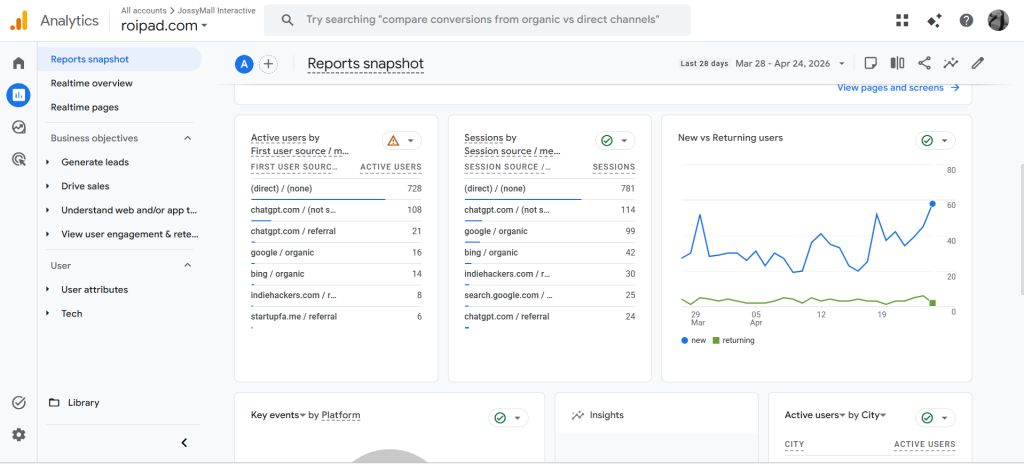
As we look toward 2026 and 2027, there is a massive shift happening that separate publishers into two groups: those who adapt and those who become obsolete. The face of traditional SEO is changing faster than ever before. For years, we have been optimizing for search engines, meticulously crafting meta descriptions and tweaking title tags to rank in a list of blue links. But the reality is that the era of the “ten blue links” is fading. The future is AI-driven discovery. We are now entering an age where users do not just search; they ask. They ask ChatGPT, they ask Gemini, and they ask Perplexity. If you are not positioning your content to be the answer these AI models cite, you are missing out on the next massive wave of traffic.
Writing for AI means shifting your strategy from keywords to authority and clarity. Large Language Models (LLMs) are designed to synthesize information and provide the most accurate, helpful answer to a user. When these models are trained or when they browse the web in real-time to answer a question, they are looking for definitive sources. They prioritize content that is structured, factual, and deeply comprehensive. In 2027, the goal is no longer just to get a user to click your link. The goal is to have the AI read your content, ingest your data, and present it as the authoritative answer. Even if the user does not click through immediately, your brand becomes the source of truth. That kind of exposure is invaluable and builds a level of trust that traditional ranking spots cannot compete with.
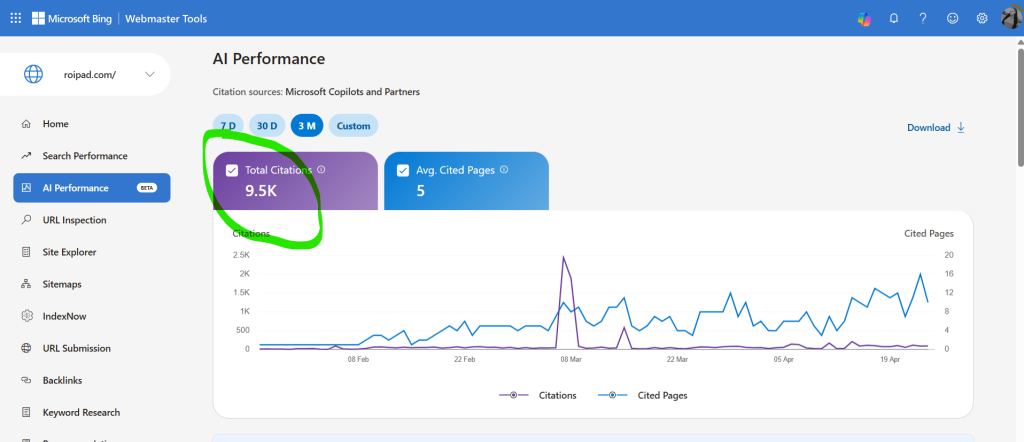
Leveraging AI traffic requires you to think differently. You are not just writing for a human reader anymore; you are writing for a machine that interprets logic and fact. This is why our focus on data aggregation and semantic relationships is so crucial. AI models love structured data, clear definitions, and interlinked concepts. If your content is vague or purely opinion-based without backing facts, an AI will likely ignore it in favor of a competitor who provides clearer data. By making your content machine-readable and fact-rich, you feed these AI systems the information they crave. As these AI assistants become the primary interface for the internet, the websites that fed them the best data will become the go-to sources, creating a feedback loop of traffic and authority that traditional SEO simply cannot match. The publishers who realize this now and start “feeding the machines” will be the dominant forces of the next decade.
You can subscribe to ROIpad newsletter here to receive more insights like this in your inbox.
SUBSCRIBE BY CLICKING THIS LINK

Angel Cee is a Full stack LAMP and webapps developer, solo founder of ROIpad a product positioning and market research tool.
ROIpad is owned by Adewumi Abake LTD, incoporated in Nigeria on July, 2023 under the companies and allied matters act 2020. Company registration number: 7035318
Angel Cee has worked as a systems and software developer in a few large organizations both in Nigeria and Russia. Most notable of which was his position as a software product developer at Altan I.T. school, I.T. Park, Yakutsk, Russia.