SaaS Metrics
Mastering Heap Analytics in 2026: A Deep Dive for Product Teams
In the fast-evolving digital product landscape, understanding user behavior is not just an advantage—it's a necessity. As of April 2026, product teams are under increasing pressure to deliver intuitive, engaging experiences that drive retention and growth. This is where a robust platform like Heap Analytics becomes indispensable. For those seeking to move beyond basic page views and truly grasp the nuances of user interaction, Heap offers a powerful, data-driven approach to product analysis. It helps teams answer complex questions about why users do what they do, without the constant burden of manual tagging.
The core promise of Heap Analytics lies in its ability to automatically capture every user interaction on your website or application. This means clicks, scrolls, form submissions, page views—all are recorded without requiring engineers to write custom code for each event. This 'autocapture' capability is a game-changer, providing a complete historical dataset that allows product managers, marketers, and analysts to define and analyze events retroactively. This article will explore how Heap Analytics empowers product teams in 2026, its advanced features, strategic applications, and how it fits into the modern data ecosystem.
The Core Power of Heap Analytics: Autocapture Explained
The foundational strength of Heap Analytics is its autocapture technology. Unlike traditional analytics platforms that require explicit event tagging before data can be collected, Heap automatically records every user interaction. Imagine launching a new feature and realizing a week later you forgot to tag a critical button click. With conventional tools, that data is lost forever. With Heap, you can define that event retroactively from the already collected raw data, gaining immediate insights into past behavior.
This approach significantly reduces the engineering overhead associated with analytics implementation and maintenance. Product teams can iterate faster, test hypotheses, and uncover unexpected user journeys without constantly relying on development resources for data collection. This efficiency is particularly valuable in 2026, where rapid deployment and data-informed decisions are paramount. Autocapture also ensures data completeness, minimizing blind spots that often arise from incomplete or incorrectly tagged manual events.
Beyond Basic Tracking: Advanced Features of Heap Analytics in 2026
While autocapture lays the groundwork, Heap's true power emerges from its sophisticated analytical features built upon this rich dataset. Product teams can leverage these capabilities to gain deeper, actionable insights:
Behavioral Cohorts and Segmentation
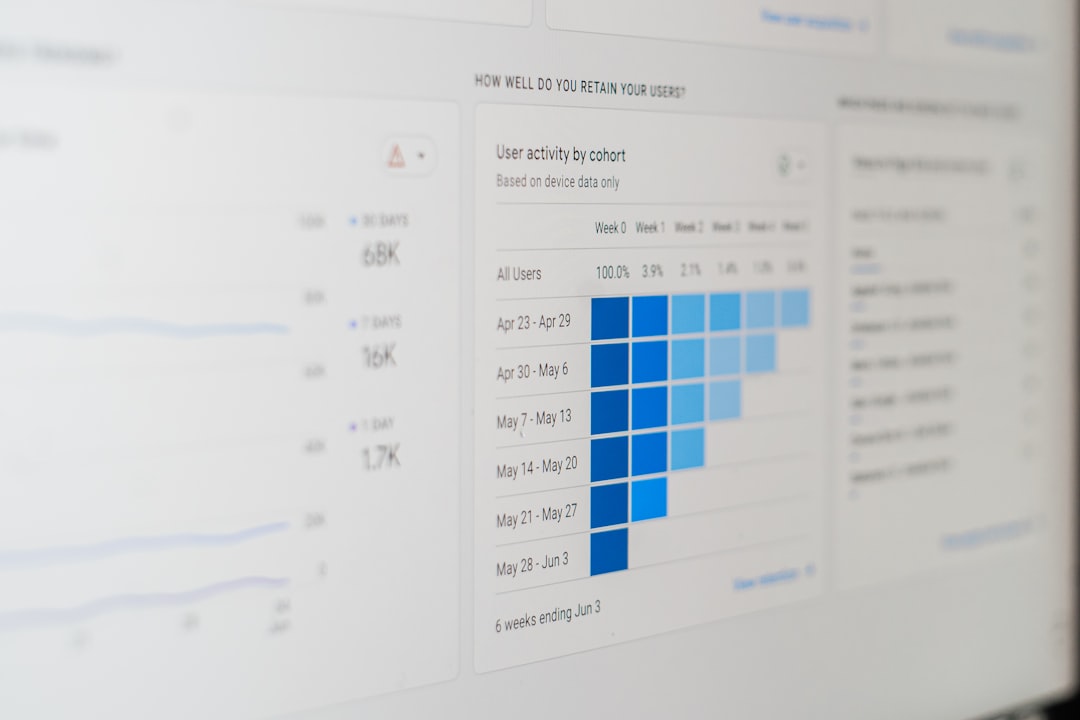
Heap allows for the creation of dynamic behavioral cohorts based on any sequence of actions. For instance, you can identify users who signed up, completed a specific onboarding step, and then used a particular feature within their first week. Analyzing these cohorts over time reveals retention trends, feature stickiness, and the impact of product changes. This deep segmentation capability helps teams understand different user groups and tailor experiences more effectively.
Funnels and User Journeys
Visualizing user paths through your product is simplified with Heap's funnel analysis. You can define multi-step funnels on the fly and immediately see conversion rates and drop-off points. More powerfully, Heap's journey builder allows you to explore open-ended user flows, revealing common paths users take before or after a specific action. This helps identify unexpected usage patterns, potential friction points, and opportunities for optimization. Understanding how users move through your product is essential for improving experiences, especially when considering how to understand and optimize feature adoption during onboarding, a critical stage for user retention.
Session Replay Integration
While Heap itself focuses on aggregated behavioral data, it often integrates seamlessly with session replay tools. This combination allows analysts to move from quantitative insights (e.g., a high drop-off rate in a funnel) to qualitative understanding by watching actual user sessions that experienced those drops. This provides invaluable context, helping product teams empathize with user struggles and pinpoint usability issues.
Graph Visualizations and Impact Analysis
Heap offers powerful visualization tools that go beyond simple charts. Its graph views can illustrate the relationships between different events and user segments, helping to uncover hidden connections in user behavior. Furthermore, its impact analysis features can show how changes in one part of the product (e.g., a new feature release) affect user behavior across other areas, providing a holistic view of product evolution.
Data Governance and Privacy in a Regulated World
As of April 2026, data privacy regulations like GDPR and CCPA continue to evolve globally, making data governance a top priority. Heap addresses this by allowing granular control over what data is collected, stored, and accessed. Teams can define data retention policies, anonymize sensitive information, and manage access permissions. This is increasingly important as the data warehousing market emphasizes cloud-native solutions with scalable, fine-grained permissions for robust data governance, as seen with tools like Amazon Redshift and AWS IAM Identity Center. This dual focus on security and efficiency is also reflected in performance-focused tools like libsqlglot, which address bottlenecks in SQL processing, highlighting the overall industry shift towards more secure and performant data handling.
Strategic Applications: How Heap Analytics Drives Product Growth
The insights derived from Heap Analytics translate directly into actionable strategies that foster product growth and user satisfaction.
Optimizing Onboarding Experiences
The initial user experience often dictates long-term retention. Heap provides unparalleled visibility into onboarding flows. By analyzing funnels, product teams can identify exactly where users abandon the process, which steps cause confusion, or which introductory features are overlooked. This data helps refine UI/UX, streamline steps, and personalize onboarding paths to maximize successful activation.
Enhancing Feature Adoption
Launching a new feature is only half the battle; ensuring users discover and adopt it is the other. With Heap, product managers can track feature usage from day one, identify power users, and understand the behaviors that correlate with higher adoption. They can then use this information to inform in-app messaging, tutorials, or even product design changes to boost engagement with new functionalities. This iterative process of analysis and optimization is fundamental to a feature's success.
User Segmentation and Personalization
Not all users are the same. Heap allows product teams to segment users based on their behaviors, demographics, or firmographics. These segments can then be used to personalize in-app experiences, targeted communications, or even inform product roadmaps. For example, identifying a segment of highly engaged users who frequently use a specific set of features can inform decisions about investing further in those areas or creating similar features.
A/B Testing and Experimentation
Heap integrates with various A/B testing platforms, allowing teams to measure the impact of different variations on user behavior with granular detail. Instead of just tracking conversion rates, you can see how a new button color or layout change affects clicks on other parts of the page, scroll depth, or subsequent feature usage. This provides a much richer understanding of experiment outcomes, guiding more effective product iterations.
Understanding User Intent and Engagement
By analyzing sequences of events and user journeys, product teams can infer user intent. Are users searching for a solution, browsing casually, or encountering a problem? Heap helps answer these questions by showing the 'what' and often providing clues to the 'why'. This deep understanding of user psychology is invaluable for designing more intuitive and satisfying product experiences. Product teams often use a variety of tools to gather context and insights, including solutions for organization and collaboration. For instance, finding the Best Cross-Platform Note Taking Apps 2026: A Deep Dive can help teams streamline their research and documentation processes, ensuring that insights from Heap are effectively captured and shared.
Heap Analytics in the Modern Data Stack
Heap isn't an isolated tool; it's a key component of a broader data ecosystem. Its ability to integrate with other platforms is crucial for a holistic view of the customer and business performance.
Integration with Data Warehouses and Cloud-Native Solutions
For organizations with sophisticated data infrastructures, Heap can export its raw, autocaptured data to cloud data warehouses like Amazon Redshift, Google BigQuery, or Snowflake. This allows businesses to combine behavioral data with other datasets (e.g., CRM, financial, marketing) for more comprehensive analysis using business intelligence tools. Recent trends in e-commerce analytics, for example, show a shift towards advanced data architectures, with solutions leveraging Apache Iceberg and Polars for time travel, cloud-native storage, and high-performance analytics, underscoring the demand for sophisticated and scalable data backends.
Connecting with Other Tools
Heap offers integrations with a wide array of tools:
- CRM Systems: Sync user behavior data with customer profiles in Salesforce or HubSpot to provide sales and support teams with richer context.
- Marketing Automation: Trigger personalized email campaigns or in-app messages based on user behavior captured by Heap.
- A/B Testing Platforms: Send Heap segments to experimentation tools for more targeted testing.
- Customer Support Tools: Provide support agents with a chronological view of a user's actions before they encountered an issue.
The ability to integrate effectively across a Best Device Ecosystem Integration Setup Guide 2026 is becoming increasingly important for businesses looking to create a seamless data flow and truly understand their users across all touchpoints.
Heap Analytics Value Estimator
Quantify the impact of Heap Analytics on your product team's efficiency, growth, and data quality in 2026.
Your Current Product Team Status
Cost & Value Factors
Estimated Annual Value from Heap Analytics
Impact Across Key Areas
Heap Analytics vs. The Competition: A Comparative Look
The analytics market is diverse, with various tools catering to different needs and budgets. While Heap stands out for its autocapture and retroactive analysis, it's helpful to compare it with other approaches.
Consider tools like Sleek Analytics, which positions itself on simplicity: "analytics shouldn't require a PhD. Paste one line of code, and within seconds you're watching real visitors move through your site live. No setup headaches, no cookie banners, no noise. Just your data, clean and simple." This lightweight approach, also highlighted in a Show HN post about Sleek's AI chat and realtime tracking, appeals to users prioritizing ease of use and quick setup for basic insights. Heap, while also simple to implement in terms of initial code, offers a much deeper analytical toolkit and historical data richness.
Table: Heap Analytics vs. Other Approaches (2026)
| Feature/Category | Heap Analytics | Traditional Event-Based Analytics (e.g., Google Analytics 4) | Lightweight Realtime Analytics (e.g., Sleek Analytics) |
|---|---|---|---|
| Data Collection | Automatic (autocapture of all interactions) | Manual (requires explicit event tagging) | Automatic (basic page views, clicks, often simpler setup) |
| Event Definition | Retroactive (define events from historical data) | Proactive (events must be defined before data collection) | Often predefined or very simple event setup |
| Historical Data | Complete historical record of all interactions | Only data for explicitly tagged events from collection date onwards | Limited historical depth, often focused on recent activity |
| Analytical Depth | Advanced funnels, journeys, cohorts, graph analysis | Standard funnels, segments, basic reporting | Realtime visitor tracking, basic metrics, often AI chat for queries |
| Engineering Overhead | Low initial setup, minimal ongoing maintenance | High initial setup, significant ongoing maintenance for new events | Very low initial setup, minimal ongoing maintenance |
| Best For | Product teams, detailed behavioral analysis, rapid iteration | Marketers, webmasters, general traffic analysis, robust reporting | Small businesses, quick website insights, simplicity-focused users |
While Metabase Data Studio offers a valuable "dependency graph feature" that prevents broken dashboards from upstream column renames, highlighting the importance of data integrity and visibility, Heap's approach to data definition and exploration inherently reduces some of these cross-tool data integrity challenges by centralizing raw event collection. This means fewer instances of "duct-taping dbt + Looker + docs together" as noted by one Metabase user, because the core behavioral data lives in one place, ready for retroactive definition and analysis.
Implementing Heap Analytics: Best Practices for 2026
To maximize the value from Heap Analytics, product teams should follow several best practices:
Strategic Setup and Configuration
While Heap's autocapture is simple to install, strategic initial configuration is still beneficial. Define key properties (e.g., user ID, account ID, subscription status) to enrich the autocaptured data. Implement Heap across all relevant platforms—web, iOS, Android—to ensure a unified view of the customer journey. For product managers working across different platforms, understanding the unique user behaviors on each is key. Even considering tools like the Best Android Note Taking App with Stylus (2026 Guide) can indirectly influence how users interact with mobile applications, providing context for analytics.
Defining Events and Properties Smartly
Even with autocapture, product teams need to thoughtfully define 'virtual events' within Heap. Instead of tagging, you're essentially telling Heap, "Show me every time a user clicked this button or completed this form." Group related events, use clear naming conventions, and leverage Heap's suggestions for common actions. Define custom properties to add business context to user actions, such as 'plan type' or 'A/B test variant'.
Fostering Team Collaboration and Data Literacy
Heap's accessibility makes it a powerful tool for the entire product organization. Encourage product managers, designers, and even marketing teams to directly use the platform. Provide training on how to build funnels, create segments, and interpret data. A data-literate team makes faster, more informed decisions. Establish a central repository for defined events and shared dashboards to maintain consistency.
Leveraging AI and Machine Learning in Analytics
The analytics space is increasingly integrating AI, as exemplified by tools like Sleek Analytics offering AI chat for querying data. Heap is also investing in AI and machine learning capabilities to help surface insights automatically, identify anomalies, and even predict future user behavior. Product teams should stay updated on these advancements and integrate them into their analytical workflows to gain a predictive edge.
"The real power of modern analytics isn't just seeing what happened, but understanding why, and then predicting what might happen next. Tools like Heap, with their comprehensive data capture, are building blocks for this future."
The Future of Product Analysis with Heap Analytics
As we look ahead from April 2026, the trajectory for product analytics, and specifically for platforms like Heap, points towards even greater sophistication and automation.
Enhanced Data Discovery
The industry is seeing a clear trend towards enhanced data discovery, from building "massive open-access genomic databases" for vanishing species to decentralized networks for data discovery. In product analytics, this translates to tools that can automatically surface patterns, anomalies, and unexpected correlations in user behavior. Heap is well-positioned to evolve in this direction, using its rich autocaptured dataset to proactively highlight insights that might otherwise go unnoticed by analysts.
Predictive Analytics and AI-Driven Insights
The next frontier involves moving beyond descriptive and diagnostic analytics to predictive and prescriptive insights. Imagine Heap not only telling you that users are dropping off at a certain point but also predicting which users are at risk of churning and suggesting interventions. AI and machine learning will play an increasingly central role in automating insight generation, allowing product teams to focus less on data extraction and more on strategic action.
The Evolving Role of Product Analysts
As analytics platforms become more automated and intelligent, the role of the product analyst will shift. Instead of spending significant time on data collection and basic querying, analysts will focus on higher-level strategic thinking, interpreting complex AI-generated insights, and driving organizational change based on data stories. Heap empowers analysts to be more strategic partners rather than just report generators.
Conclusion
In 2026, for any product-led organization aiming for sustainable growth and deeply satisfied users, mastering Heap Analytics is a strategic imperative. Its autocapture technology eliminates data collection bottlenecks, providing a complete historical record of user interactions. This foundation enables powerful retroactive analysis, sophisticated behavioral segmentation, precise funnel optimization, and comprehensive journey mapping. Heap empowers product teams to move with agility, make data-informed decisions, and ultimately build products that users love.
By integrating seamlessly into the modern data stack and continually evolving with AI and machine learning advancements, Heap Analytics ensures that product teams have the visibility and insights needed to thrive in a competitive digital world. It’s not just about tracking clicks; it’s about understanding the entire user story, from the first interaction to long-term loyalty, and using that narrative to shape the future of your product.